

Obtenga el suyo gratis Guía de autonomía de drones ¡Hoy!

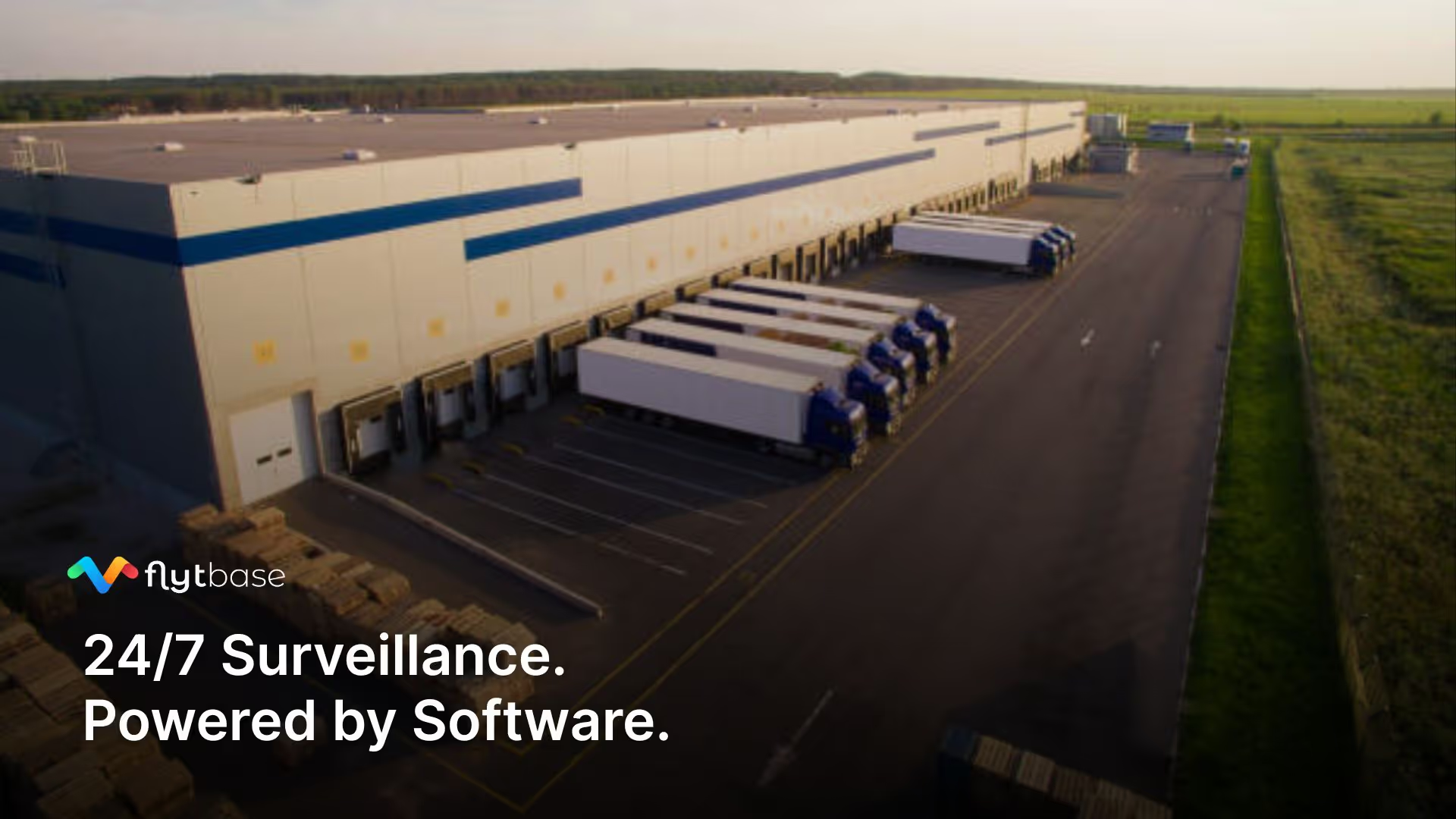
Security operations used to be measured by manpower and camera count. But even with guards on-site and hundreds of cameras streaming to control rooms, incidents still slip through. The truth is, 24/7 surveillance was never a hardware problem — it was a workflow problem.
The gap isn’t in the sky; it’s in how data moves. Footage from patrols, camera alerts, and access systems all live in separate silos, forcing operators to jump between tools. By the time a supervisor connects the dots, the event is over.
The limits of human attention
At Premier Security, guards once patrolled multiple high-value sites across wide perimeters. Incidents were logged manually, video clips uploaded hours later, and reports compiled the next day. Despite advanced cameras and alarms, reaction times stayed slow because the information flow was still manual.
Titan Protection, facing similar challenges across logistics facilities, realized that scaling coverage wasn’t about adding cameras or guards; it was about orchestration. The company needed a system that could manage alerts, video, and autonomous patrols as one continuous workflow.
When autonomy meets orchestration
That shift began when both companies adopted docked drones powered by the FlytBase platform. Each drone now launches automatically on a schedule or in response to specific triggers — motion detection, access breaches, or temperature alerts. Every flight feeds data directly into a unified dashboard, allowing operations teams to review footage and incidents in real time.
This orchestration layer, not the hardware itself, is what finally makes “24/7 surveillance” real. FlytBase’s automation engine connects docks, sensors, and alerts into a single, always-on loop, ensuring that no patrol or alarm goes unverified.
The data advantage
When every patrol becomes a data source, insights emerge that human-led monitoring could never reveal. Across multi-site operations, FlytBase users now track:
- Patrol coverage heatmaps across time and zones
- Alert-to-verification times for each event
- Site-specific incident patterns based on time of day
Titan Protection reports up to 40% faster response times and 60% lower operational costs since automation replaced manual patrol scheduling.
Building a command center in the cloud
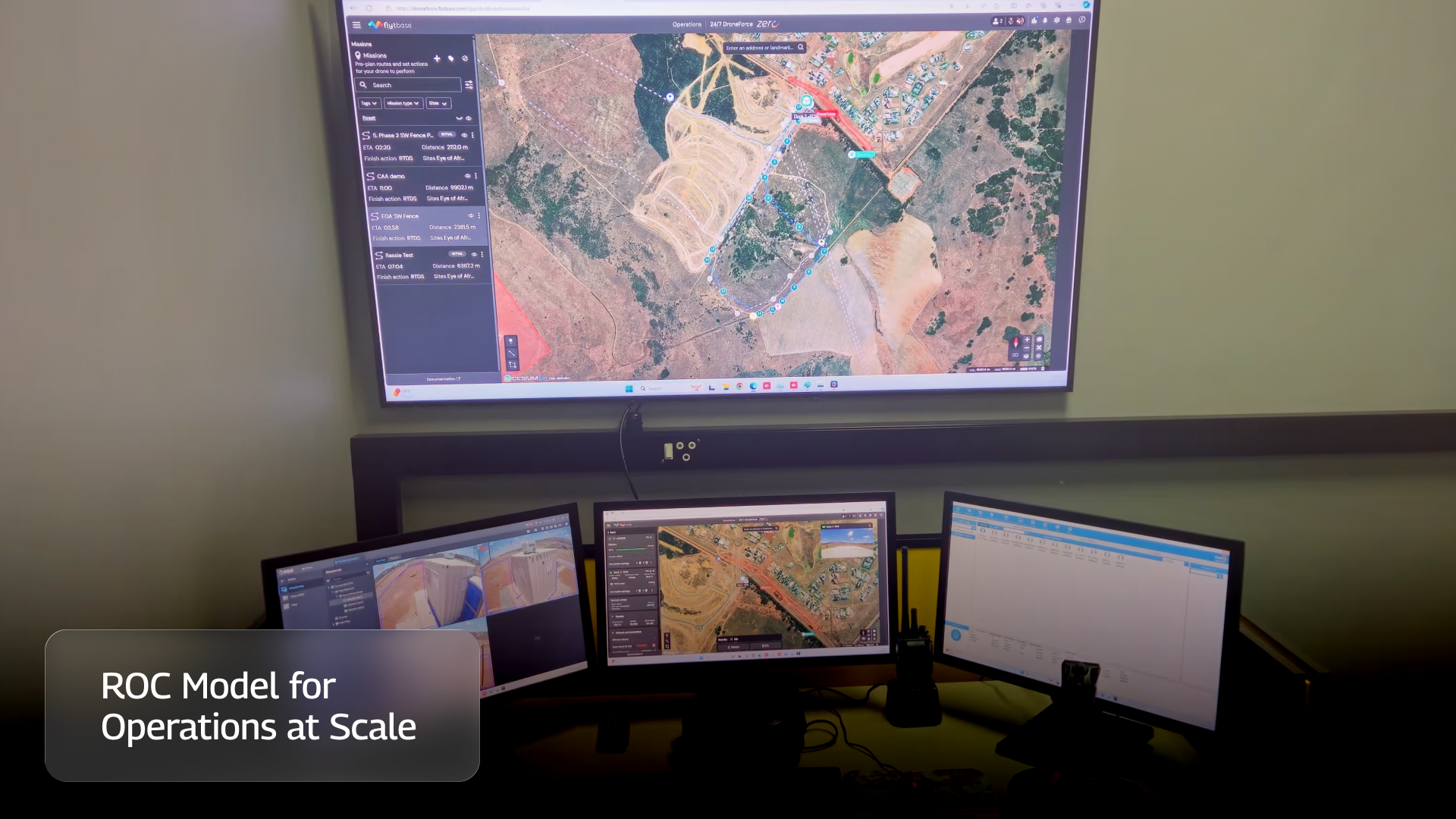
The modern security model is no longer about who’s on-site — it’s about how fast teams can act. With FlytBase, companies manage fleets of autonomous drones across multiple facilities through a single platform. Each drone acts as a mobile sensor, feeding continuous visual data into their command system.
This turns 24/7 surveillance from a staffing challenge into a software-driven orchestration model — measurable, scalable, and always active.
Rethinking “always on”
True 24/7 security isn’t achieved by more cameras or guards; it’s achieved by smarter systems. FlytBase enables enterprises like Premier Security and Titan Protection to move from constant supervision to constant intelligence — closing the loop between detection, verification, and response.
Explore how autonomous surveillance transformed these operations in the FlytBase Case Study Library.
Preguntas frecuentes
Encuentre respuestas rápidas a preguntas frecuentes sobre compatibilidad, configuración, funciones y precios
Because the biggest challenge isn’t adding more guards or cameras—it’s connecting data. Most incidents slip through when alerts, video, and sensor feeds live in separate silos. Software like FlytBase unifies these streams into one automated workflow, closing the loop between detection and response.
Autonomous drones can launch from docks on schedules or alerts, capture live footage, and feed data directly into a central dashboard. With FlytBase, every patrol becomes a data point that improves situational awareness and response times.
Customers like Titan Protection report up to 40% faster response times and 60% lower operational costs after automating patrol workflows with FlytBase’s orchestration layer.
Yes. FlytBase supports integration with alarms, Video Management Systems (VMS), and access controls through its workflow engine. This allows drones to act as mobile sensors within existing security infrastructure.
.webp)
.svg)
.webp)
.png)
