




Obtenga el suyo gratis Guía de autonomía de drones ¡Hoy!

Most enterprises assume that deploying drones means operating them. That assumption holds in the early stages. A pilot program is launched. A few docks are installed. Missions are planned and executed locally. The system proves it can deliver value. But as deployments expand across sites, use cases, and teams, a different reality begins to emerge.
Running drone operations at scale is not just an extension of deployment. It is a function in itself. And that function does not scale easily inside the enterprise.
The Layer That Defines Scale
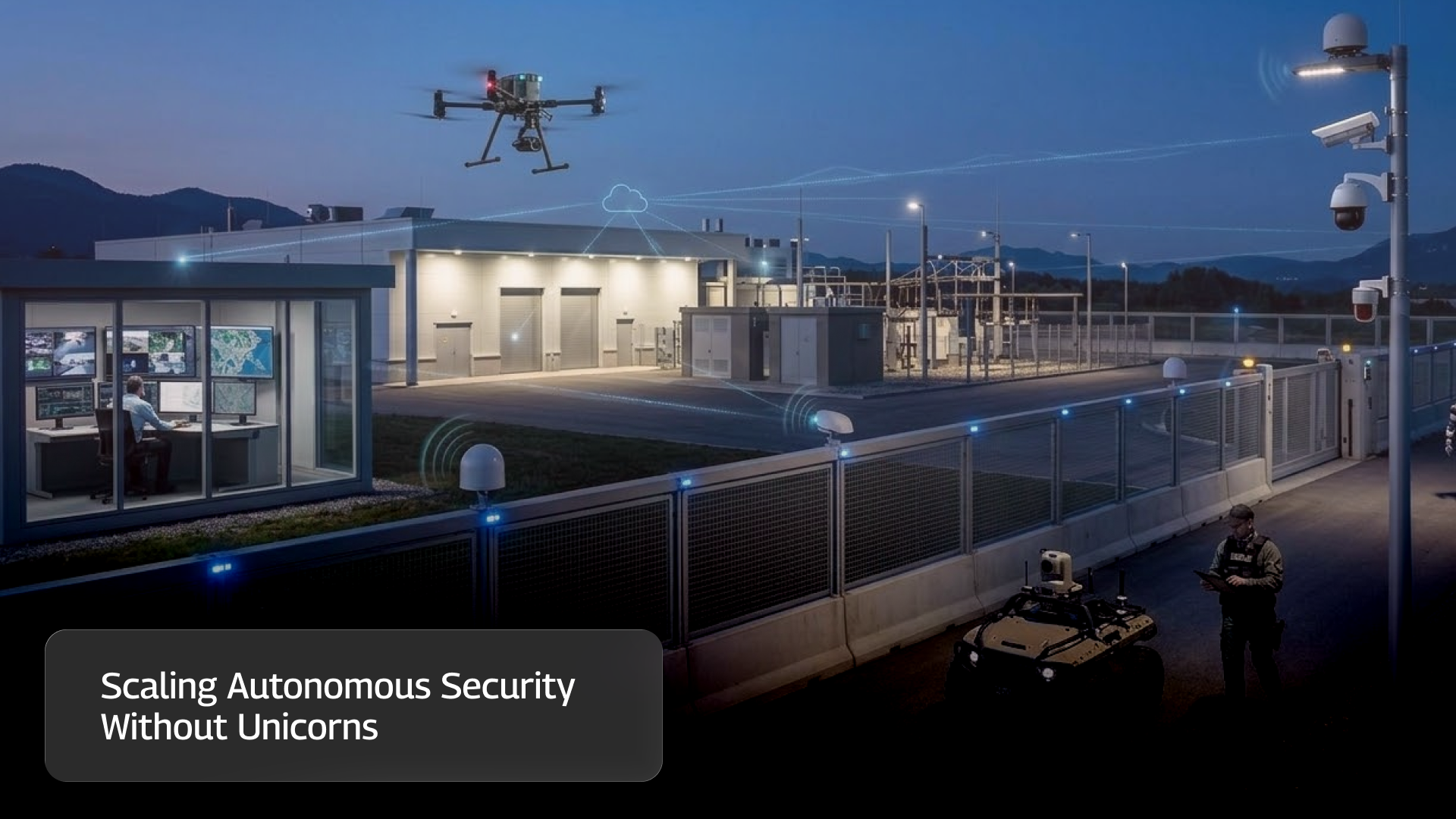
Every autonomous drone deployment has an operational layer. It sits between the infrastructure and the outcomes. This layer is responsible for coordinating missions, managing fleets, ensuring safety, handling compliance, integrating with enterprise systems, and responding to events in real time.
In small deployments, this layer is often invisible. A few people manage it alongside other responsibilities. As the system grows, it becomes more demanding. More sites mean more simultaneous missions. More use cases mean more variability. More stakeholders mean more coordination.
At a certain point, this layer stops being manageable as an internal extension. It becomes a system that requires its own structure, processes, and expertise. That is the point where most programs begin to slow down.
The Emergence of the ROC Model
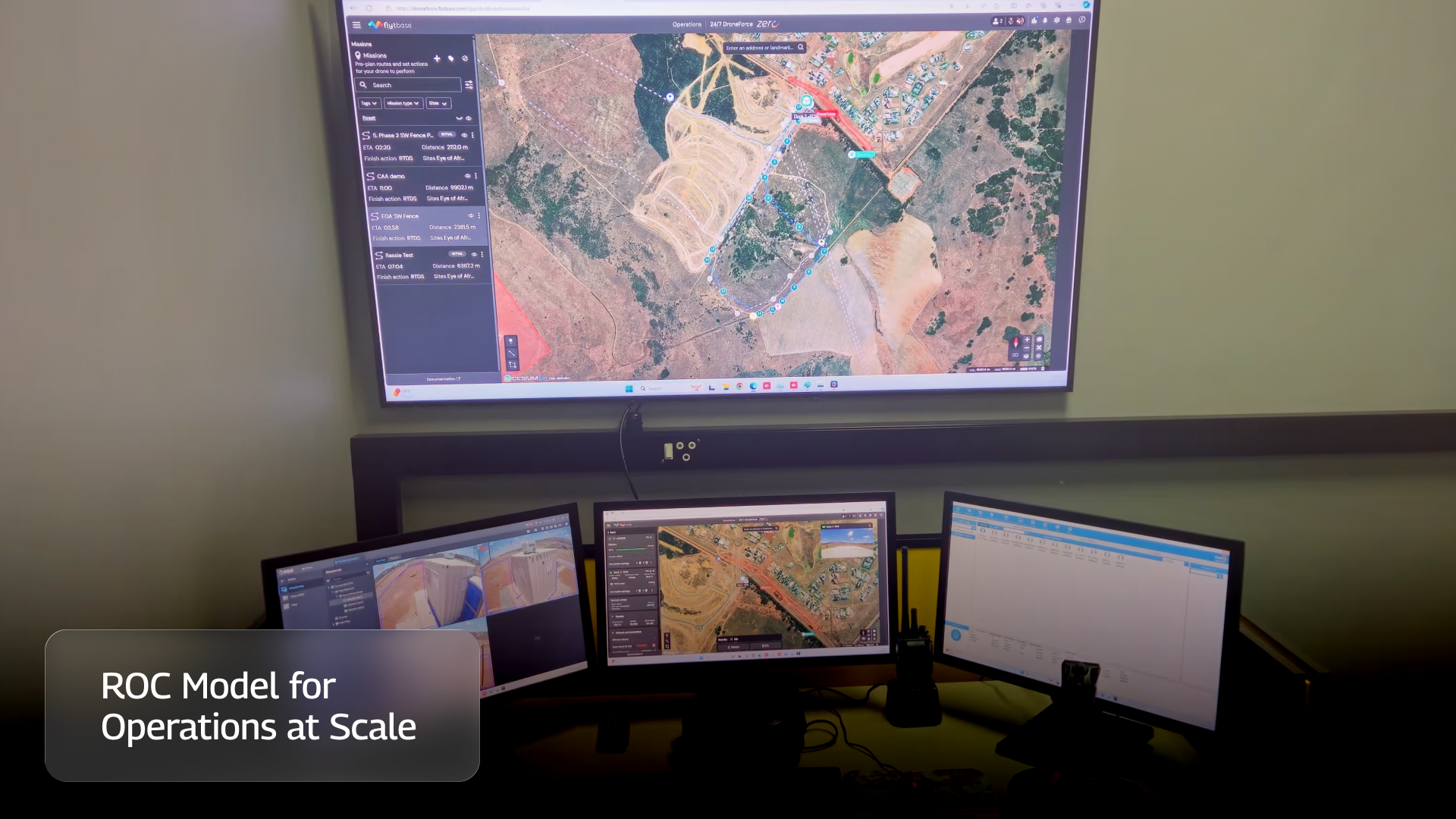
Remote Operations Centers are emerging as the operating model that addresses this challenge. A ROC centralizes the operational layer. Instead of managing drone operations at each site, missions are coordinated, executed, and monitored from a centralized team that can oversee multiple locations simultaneously.
This team handles:
- mission execution across sites
- fleet monitoring and coordination
- safety and airspace compliance
- pilot operations and scheduling
- integration with alarms, VMS, and enterprise systems
From the enterprise perspective, the experience changes. They are no longer running drone operations. They are receiving outcomes. A patrol is completed. An inspection is delivered. An alert is verified. The operational complexity behind these actions is handled by the ROC.
A Familiar Pattern
This shift is not unique to drones. Security operations have followed a similar path. Enterprises do not typically manage every alarm, camera feed, and incident response internally. They rely on Security Operations Centers that monitor multiple facilities, interpret signals, and coordinate responses.
The enterprise defines what needs to be monitored. The operations center ensures it is done. Drone operations are beginning to follow the same pattern. As deployments scale, the question shifts from how do we run this internally to should we be running this at all.
Why ROC Becomes Necessary
The ROC model is not just an efficiency improvement. It emerges because of the inherent complexity of operating autonomous systems at scale. High-quality operations require continuous coordination across multiple dimensions.
Systems must integrate with alarms, video platforms, and enterprise workflows. Weather and environmental conditions must be monitored in real time. Regulatory compliance must be maintained across jurisdictions. Pilot certifications and operational constraints must be tracked continuously.
At the same time, multiple missions across different sites must be executed simultaneously, often with different priorities and constraints. Building and maintaining this capability internally requires significant investment in software, processes, and specialized teams.
For many organizations, this is not a core competency.
Separation Makes ROC Possible
The ROC model becomes viable only when a deeper structural shift has already taken place. Drone systems must separate domain expertise from operational execution. Security teams, inspection teams, and facilities teams define what needs to be done. They think in terms of patrol coverage, asset inspections, or maintenance workflows.
The ROC handles how those requests are executed. This separation allows a centralized operations layer to serve multiple sites and multiple customers without requiring domain-specific knowledge at the operational level.
It also enables consistency. Operations are executed using standardized procedures, safety protocols, and compliance frameworks, regardless of where the request originates. Without this separation, the ROC model cannot function. With it, scaling becomes possible.
The Role of Interfaces
For ROC-based operations to work, different roles must interact with the system in different ways. The enterprise does not need to see flight paths, telemetry, or airspace constraints. It needs to see jobs tied to its facilities and assets, along with the results those jobs produce. ROC operators require a completely different view. They need visibility into mission parameters, constraints, fleet status, and operational queues across multiple sites.

Governance layers, particularly in regulated environments, require oversight into compliance, audit trails, and operational adherence. Most systems today still assume these roles overlap. They do not. Designing for this separation is what allows a single operational layer to scale across many users and use cases.
From Operations to Outcomes
Once operations are centralized through a ROC, the economics begin to change. Traditional deployments require upfront investment in infrastructure, pilots, and software before value is realized. The ROC model enables a different approach. Enterprises can begin consuming drone capabilities as a service.
A patrol becomes a request. An inspection becomes a task. An incident verification becomes an on-demand outcome. Pricing aligns with what is delivered rather than what is deployed. This reduces the barrier to entry and makes expansion more flexible. Organizations can start small and scale based on actual usage and value, rather than committing to large upfront investments.
The Next Layer of Scale
As ROC-based operations mature, the model extends beyond drones. The operational layer becomes a coordination system for multiple forms of physical automation. Drones, ground robots, and other autonomous systems can operate within the same framework, receiving jobs and delivering results through shared interfaces. The enterprise interacts with a unified layer of outcomes. The underlying complexity remains centralized.
The Shift That Defines the Industry
Autonomous drones are often framed as an advancement in aerial technology. But the defining shift is not the aircraft. It is the operating model.
ROC introduces a way to centralize expertise, standardize execution, and scale operations across multiple environments without replicating complexity at every site. It separates execution from intent, It transforms infrastructure into a service layer and it allows organizations to focus on outcomes rather than operations.
As deployments continue to grow, this model will become less of an option and more of a necessity because at scale, the question is no longer how to operate drones, It is who should be operating them at all.
Preguntas frecuentes
Encuentre respuestas rápidas a preguntas frecuentes sobre compatibilidad, configuración, funciones y precios
.webp)
.svg)
.webp)
.png)