

Obtenga el suyo gratis Guía de autonomía de drones ¡Hoy!

Managing surveillance across one of the world's busiest ports means watching thousands of vessel movements every day. For Singapore's Maritime and Port Authority (MPA), doing that consistently required getting eyes on open water fast, across multiple locations, without sending crews out to every site. MPA became the first port authority to deploy remotely operated autonomous drones across its port waters, cutting deployment time by 80% and extending surveillance range from 400 meters to 5 kilometers.
When Your Surveillance Can Only See as Far as the Boat
Traditional maritime surveillance has a hard limit built into it. A drone operator needs to be physically present at the launch site, flying within line of sight, which caps coverage at roughly 400 meters. As the drone moves, the pilot relocates. In a port handling thousands of vessel movements daily, that means the areas furthest from a pier, the zones most likely to see oil spills or suspicious activity, are also the hardest to watch.
For MPA, this created a gap that more patrol craft could not close. Every increase in surveillance frequency required a proportional increase in crew hours and vessels. Coverage scaled only with headcount, and headcount has a ceiling.
The third problem was response time. When confirming an incident meant dispatching a vessel to the location, every response arrived after the fact. By the time a camera was airborne, the window for intervention had often already closed.
Removing the Pilot from the Water Changes Everything
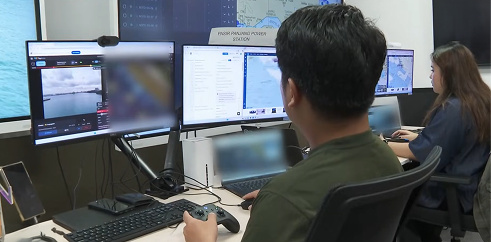
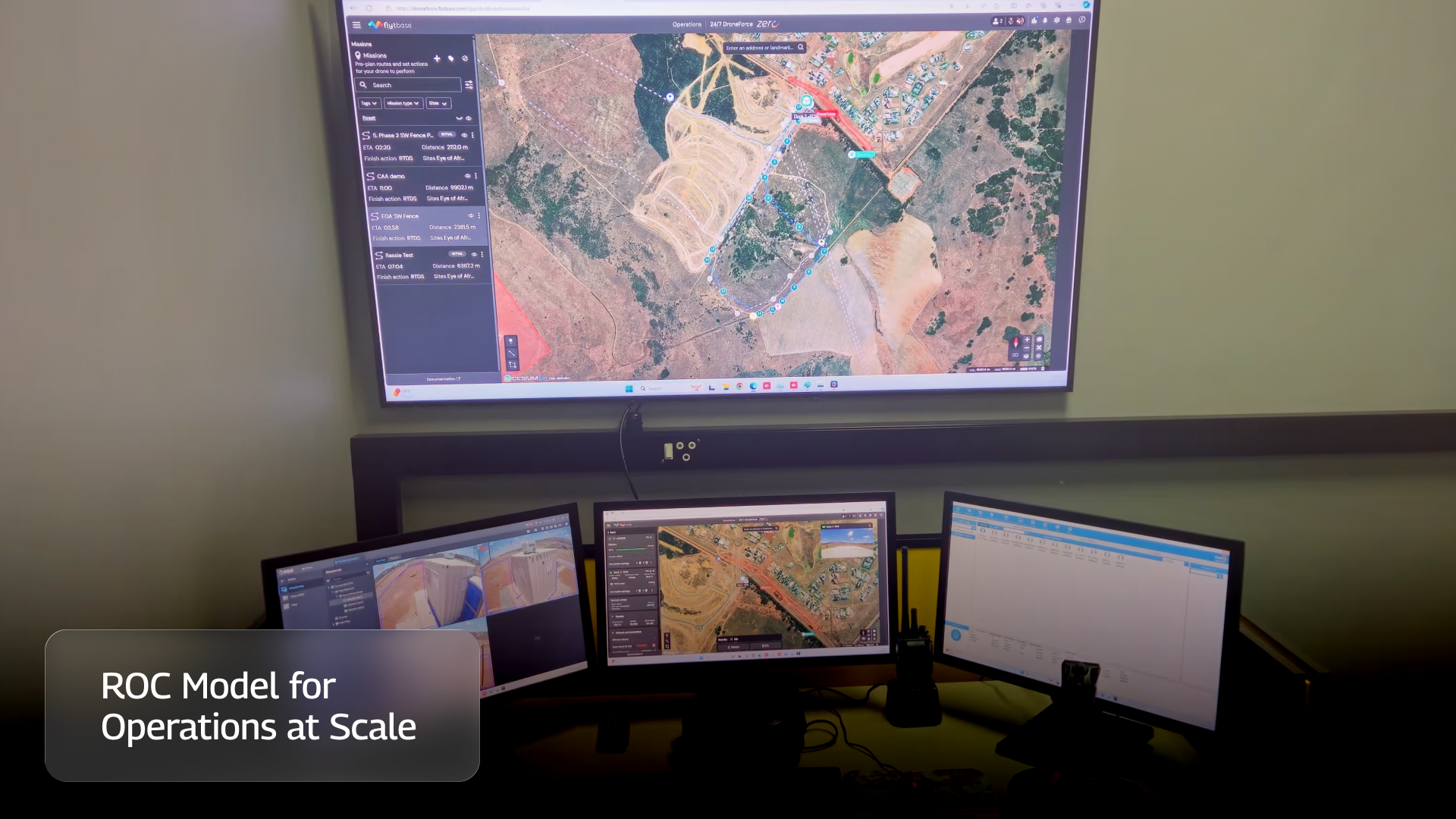
MPA's approach was structural rather than incremental. Instead of adding more boats or more on-site pilots, the authority deployed a drone-in-a-box system operated entirely from a centralized control center in one-north, with no operator required at sea.
Each station-based drone weighs about 1.4 kg, launches and lands autonomously, and flies up to 60 meters above the water. Because operators no longer travel to a site to launch, deployment time dropped by up to 80% compared to physical on-site launch. A single team now runs multiple drones across Marina South Pier, West Coast Pier, and Pasir Panjang Power Station simultaneously.
The range shift is equally significant. Remote operation extends effective coverage from the traditional 400-meter ceiling to as far as 5 kilometers offshore. Zones that were previously out of reach are now part of the routine surveillance footprint.
What the Numbers Look Like in Practice
The operational difference between the old model and the new one comes down to three measurable shifts:
- Deployment speed improved by up to 80% with no on-site operator required
- Surveillance range extended from 400 meters to 5 kilometers per drone
- One control center now manages multiple drones across three port zones simultaneously
- High-resolution cameras and video analytics feed real-time insight to patrol craft and partner agencies
- Crewed vessels are freed from routine watching and redirected to targeted interventions
This is not a replacement model. Patrol craft still handle the work that requires people on the water. The autonomous drone layer handles the continuous, repeatable surveillance that previously consumed those same resources.
From Reactive Patrols to Real-Time Response
The shift in how MPA operates surveillance is the more significant change. Previously, patrol craft would cover a zone, leave, and return later. Now, the control room gets a live feed across multiple sites in parallel. When the cameras surface an anomaly, operators share the location and footage directly with patrol craft and partner agencies, who respond to a confirmed position rather than a general area.
Oil spill detection is a direct example. A spill spreads in minutes. With the old model, detection depended on a vessel happening to be nearby. With autonomous drones operating across a 5-kilometer range, the control room can detect a spill as it starts and direct the appropriate response while containment is still possible.
MPA is now working to expand coverage to most of Singapore's port waters, with additional applications including direct delivery to ships under evaluation.
The Bigger Shift for Port Operations
Singapore's deployment shows what becomes possible when the operator leaves the boat. Surveillance is no longer constrained by how many crews are on shift or how far a vessel can travel. It is constrained only by how many drones are in the air.
For port authorities and maritime operators evaluating autonomous drone programs, the MPA model offers a clear starting point: centralize the operation, automate the routine, and redirect your crewed resources to the interventions that actually need them.
Preguntas frecuentes
Encuentre respuestas rápidas a preguntas frecuentes sobre compatibilidad, configuración, funciones y precios
.webp)
.svg)
.webp)
.png)
