.png)





Obtenga el suyo gratis Guía de autonomía de drones ¡Hoy!


Behind every scaled autonomous operation is a series of difficult decisions.
At NestGen Retreat ’26, we recognized leaders who are not just adopting autonomous drone systems, but operationalizing them across real-world environments. Across industries, the shift from pilots to scaled deployments continues to define progress in autonomy.
One pattern stands out.
Autonomy does not fail at the level of technology. It fails at the level of execution.
Jury-Led Awards
Pioneer of the Year: Nicola Marietti, AI View Group
Nicola Marietti was recognized for stepping into autonomy before proven models, standards, or clear ROI frameworks existed. His work involved testing early deployments, iterating through uncertainty, and continuing to invest despite the absence of established playbooks.
This kind of early-stage conviction is what enables entire categories to move forward. It creates the first operational reference points that others later refine and scale.
His recognition highlights a critical truth: every scaled deployment begins with someone willing to act before certainty.

Operational Excellence: Jean Keultjes, Skeyes
Jean Keultjes was recognized for building structured, repeatable drone operations within a regulated airspace environment. His work focused on standardizing workflows, ensuring reliability, and maintaining consistent performance over time.
In autonomy, consistency is what transforms capability into infrastructure. One successful deployment is not enough; systems must perform predictably across missions and over long durations.
This award signifies the shift from experimentation to operational discipline.

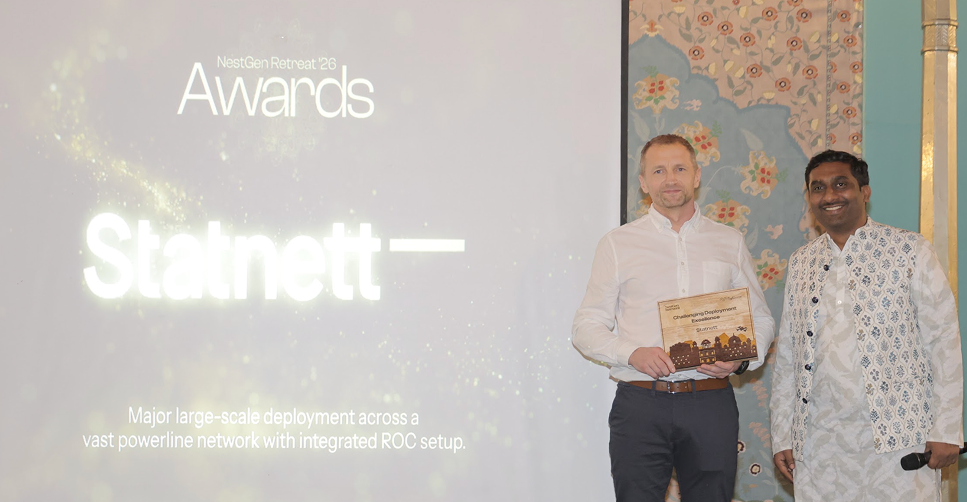
Challenging Deployment Excellence: Ola Gunnar Braten, Statnett
Ola Gunnar Braten was recognized for implementing autonomous systems across large-scale, mission-critical infrastructure. These deployments operate in environments defined by complexity, scale, and operational constraints.
In such conditions, failure is not theoretical; it has real consequences. Systems must function reliably despite environmental, logistical, and operational challenges.
This recognition underscores that autonomy proves its value not in controlled settings, but in the most demanding real-world scenarios.
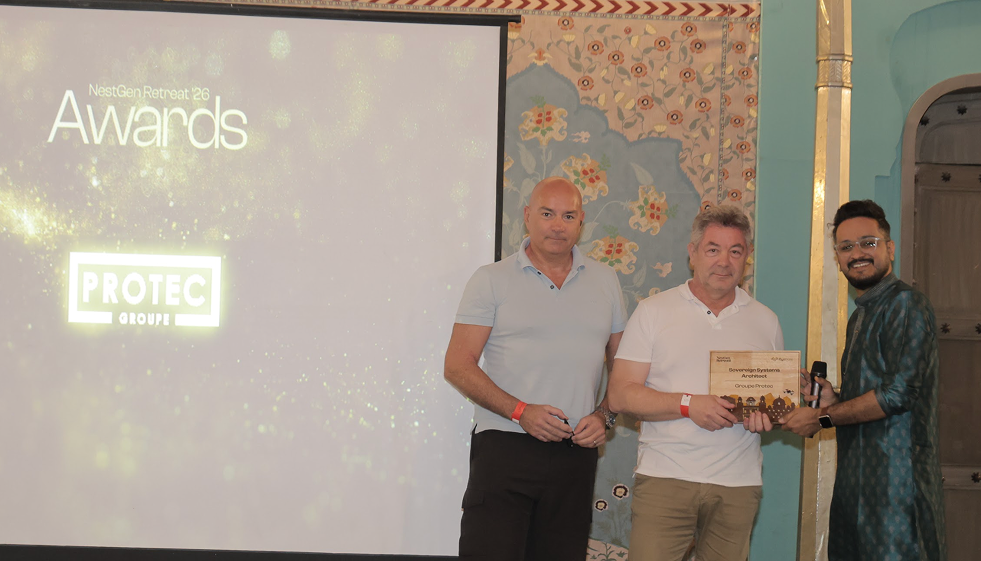
Sovereign Systems Architect: Groupe Protec
Groupe Protec was recognized for designing drone program architectures suited for high-trust, enterprise environments. Their work emphasizes secure integration, compliance with regulatory frameworks, and alignment with broader enterprise systems.
As autonomy scales, architecture becomes a determining factor in long-term success. Deployments that are not designed for security and integration cannot sustain adoption.
This award reflects the growing importance of system design as the foundation for enterprise-scale autonomy.
Visionary of the Year: Matt Ierston, Airbus
Matt Ierston was recognized for shaping a long-term view of autonomy that connects technology, regulation, and enterprise strategy. His work goes beyond current deployments to define how the industry must evolve over time.
Vision in this space is not about incremental improvement. It is about anticipating constraints, aligning stakeholders, and building toward a future state before it becomes obvious.
This recognition highlights the importance of strategic foresight in guiding large-scale adoption.

Master of Scale: Andrew Myers, Terabase
Andrew Myers was recognized for moving beyond proof of concept to structured, multi-site deployment. His work involved aligning internal teams, standardizing processes, and expanding operations in a controlled and repeatable way.
Scaling is where most autonomous programs stall. It requires coordination across technology, operations, and business functions; not just technical success.
This award signifies that scale is an organizational capability, not just a technical milestone.
Business Excellence: Rodrigo Mendoza, Walross
Rodrigo Mendoza was recognized for building commercial structure into autonomous operations. His work ensures that deployments are not only technically successful, but economically sustainable over time.
In many cases, autonomy fails not because it cannot work; but because it cannot justify itself as a business.
This recognition highlights that long-term adoption depends on clear value creation, accountability, and repeatable business models.
Community-Driven Recognition
In addition to the jury-led categories, this year also included two peer-led awards, recognizing contributions identified directly by the community.
Innovator: Fearghus Foyle, GeoAerospace
Selected through peer recognition, Fearghus Foyle was recognized for challenging conventional approaches to deployment and introducing ideas that reshape how autonomy is perceived.
Peer feedback highlighted concepts that improve acceptance and simplify how systems are understood and adopted in real-world environments.
This award reinforces that meaningful innovation is not about novelty; it is about reducing friction to adoption.

Ecosystem Catalyst: Matt Ierston, Airbus
Also recognized by the community, Matt Ierston was awarded for contributing beyond individual deployments through knowledge sharing, tools, and frameworks that help others move faster.
As peers noted, his work makes complex concepts easier to understand and apply, whether through presentations, tools, or shared insights.
This recognition highlights a key reality: autonomy scales faster when knowledge is shared across the ecosystem.

The Pattern Behind Scaled Autonomy
Across industries, geographies, and regulatory environments, the pattern is consistent.
Autonomy scales when:
- decisions are made early
- systems are built for reliability
- operations are structured for repeatability
- execution continues beyond the pilot
This is what real adoption looks like.
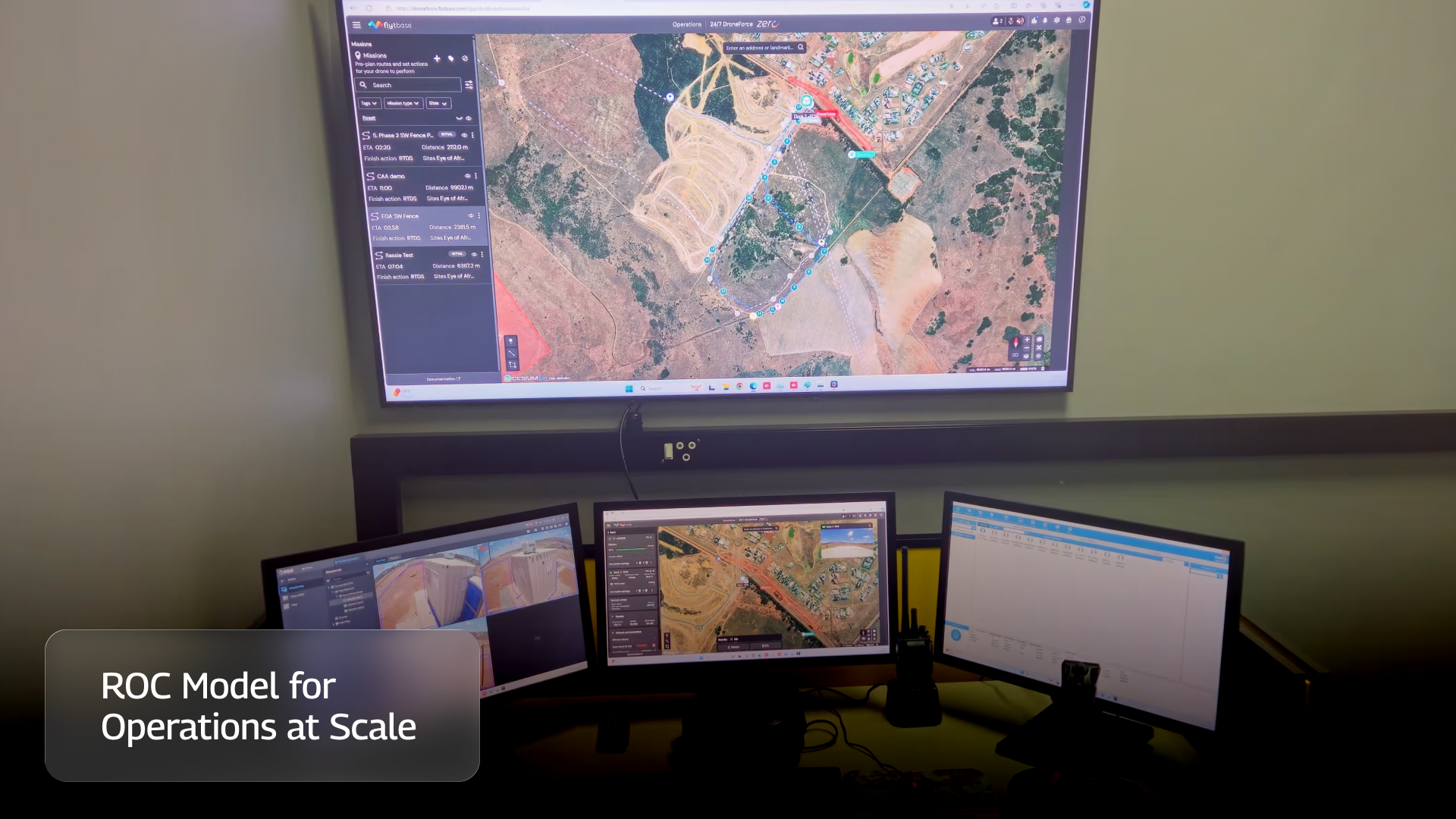
At FlytBase, we see these same patterns across enterprise deployments, where autonomy becomes part of everyday operations
Preguntas frecuentes
Encuentre respuestas rápidas a preguntas frecuentes sobre compatibilidad, configuración, funciones y precios
.webp)
.svg)
.webp)

.png)
