




Get Your Free Drone Autonomy Guide Today!


For most teams exploring autonomous drone operations, the moment of conviction does not come from technology. It comes from economics. Once the numbers make sense, once the use cases translate into measurable value, the question shifts quickly from possibility to execution.
And that is exactly when regulation enters with full weight. Not as a final step, but as the factor that determines how quickly that opportunity can actually be realized. The same system that looked straightforward in a pilot phase suddenly encounters timelines, approvals, safety cases, and regulatory expectations that reshape how progress happens.
Nothing about the opportunity changes. But the pace does.
Regulation is a strategic decision, not a step
It is tempting to think of regulation as a process that sits outside the business. Something to complete before scaling can begin. In reality, it becomes a decision embedded within the business itself.
Every hour spent navigating regulatory pathways is an hour not spent building the operational or commercial side of the program. That does not make regulatory work optional. It makes it a question of ownership.
How much of this do you want to take on yourself?
Some teams treat regulatory capability as a core part of their advantage. Others treat it as a layer that can be accessed, shared, or offloaded. The difference between these approaches is not philosophical. It directly affects how fast a team becomes operational and how quickly it starts compounding value.
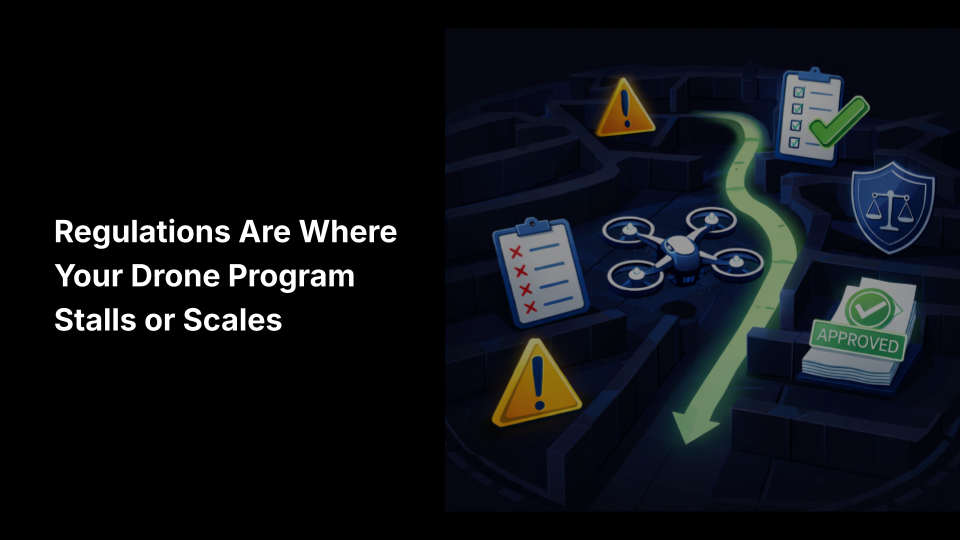
Once this framing becomes clear, the complexity of the landscape begins to simplify. What initially feels like a maze of approvals and constraints starts to look like a set of distinct paths, each with its own trade-offs.
The paths to getting operational
Operators across different markets have taken different approaches to solving the same problem, and over time, a few clear patterns have emerged. Some choose to build everything themselves. They engage deeply with aviation authorities, develop their own safety frameworks, and work through approvals in complex environments. This is often the path taken when the operation itself is novel, whether it is dense urban deployment, shared infrastructure, or multi-stakeholder coordination.
What this builds is depth and control. The operator understands the system because they have shaped it. But expansion comes with friction. Approvals are often tied to specific locations or conditions, which means scaling requires repeating parts of the process. Progress is steady, but rarely fast.
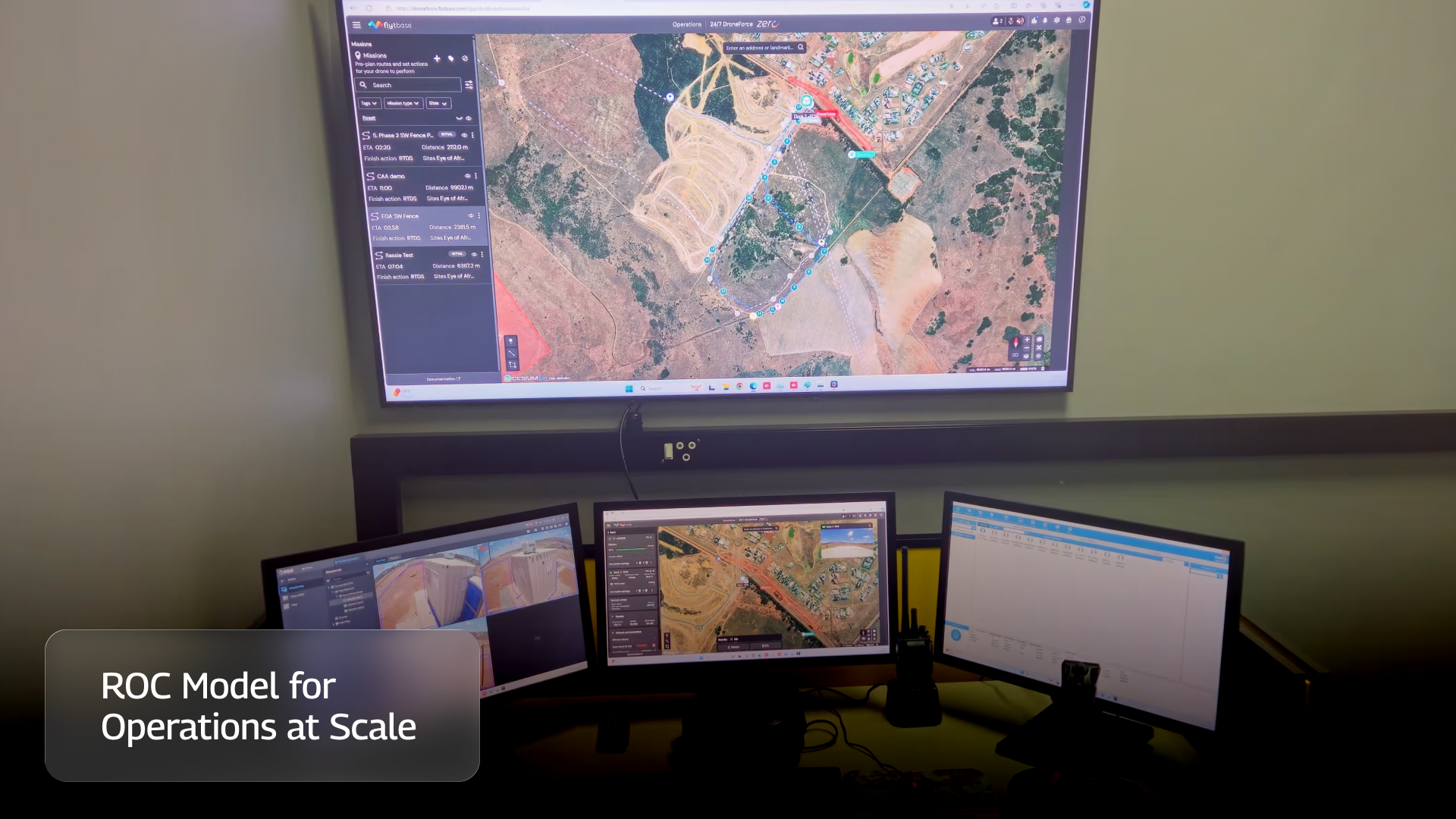
Others invest in building an organizational capability that allows them to scale more efficiently. Instead of solving regulation one site at a time, they develop systems, processes, and compliance structures that enable them to operate within an approved scope across multiple deployments.
This requires maturity and upfront effort. It is not the fastest way to get started. But once in place, it changes how scaling works. New sites can be activated without starting from zero, and operations become more repeatable. The initial investment pays off in speed later.
A third group approaches the problem differently. Instead of building regulatory capability internally, they operate within frameworks that already exist. They partner with organizations that hold approvals and work under those structures, allowing them to get operational in a fraction of the time.
The trade-off here is structural rather than technical. Some control is exchanged for speed. But for many teams, especially those focused on building customer relationships and operational expertise, that trade-off is worth making. It allows them to start learning, delivering value, and generating revenue much earlier.
In practice, these paths are not mutually exclusive. Many operators begin with one approach and evolve into another as their business grows. What matters is not choosing a perfect path, but choosing one that aligns with where the business is today.
Geography changes the equation
Regulation does not exist in a vacuum. It is shaped by the region in which an operator works, and that introduces another layer of complexity.
Some regulatory environments are highly structured and site-specific. Others allow broader operational flexibility once a certain level of capability is demonstrated. Some are beginning to move toward performance-based models, where operators can assess new locations within an approved framework rather than seeking fresh approval each time.
This means scaling is not just about operational capability. It is also about regulatory strategy. An approach that works in one country may not translate directly to another. Operators working across regions often find themselves adapting their strategy, combining different models, and learning how to navigate multiple systems at once.
The teams that move fastest are not the ones who find a single universal solution, but the ones who learn how to operate effectively within this variability.
What actually determines speed
At first glance, these differences look like regulatory or technical details. But underneath, they come down to a single question of focus.
Where do you want to spend your energy?
Do you want to build regulatory capability as a core asset of your business?
Do you want to leverage existing structures to move faster?
Do you want to start with speed and build depth over time?
Each of these choices leads to a different trajectory. Not just in how quickly approvals are obtained, but in how soon the team begins building real operational experience. And that experience compounds.
The real advantage in this industry does not come from a single approval or deployment. It comes from what happens after. The workflows that get refined, the integrations that get built, the trust that develops within an organization, and the operational maturity that improves with every flight. Delays at the beginning do not stay contained. They extend forward, slowing down everything that follows.
The decision that shapes scale
For teams that have already seen the value of autonomous drones, the question is no longer whether to move forward. It is how. Regulation will be part of that journey regardless of the path chosen. The difference lies in how it is approached and how much of the burden is carried internally. The opportunity is real. The paths are known. The trade-offs are clearer than they have ever been. What determines who scales is not access to technology or even access to capital.It is how quickly they choose their path through regulation and start building.
FAQs
Find quick answers to common questions about compatibility, setup, features, and pricing
.webp)
.svg)
.webp)

.png)
