

Get Your Free Drone Autonomy Guide Today!

For years, physical security followed a simple rule. If something went wrong, you added more guards or more cameras. Costs went up. Coverage barely improved.
Security teams are now learning that the real problem was never choosing between people or technology. It was failing to design the right blend for each site.
When Adding Guards Doubles Cost but Not Coverage
At large outdoor facilities, the pattern was predictable. A theft occurred. The client called their security provider. One guard was added. When incidents continued, a second guard followed.
Titan Protection saw this across car dealerships, industrial yards, and logistics sites. Two guards meant double the monthly spend, but coverage barely changed. Guards patrolled together, talked, and covered the same ground. On a 15-kilometer perimeter, blind spots remained. The issue wasn’t performance. It was design.
If you sell guards, the answer is more guards. If you sell cameras, the answer is more cameras. What was missing was a diagnosis of what actually needed to happen when a threat appeared.
The Shift: Designing a Blended Security Model
Titan’s first autonomous drone deployment changed how they approached security design.
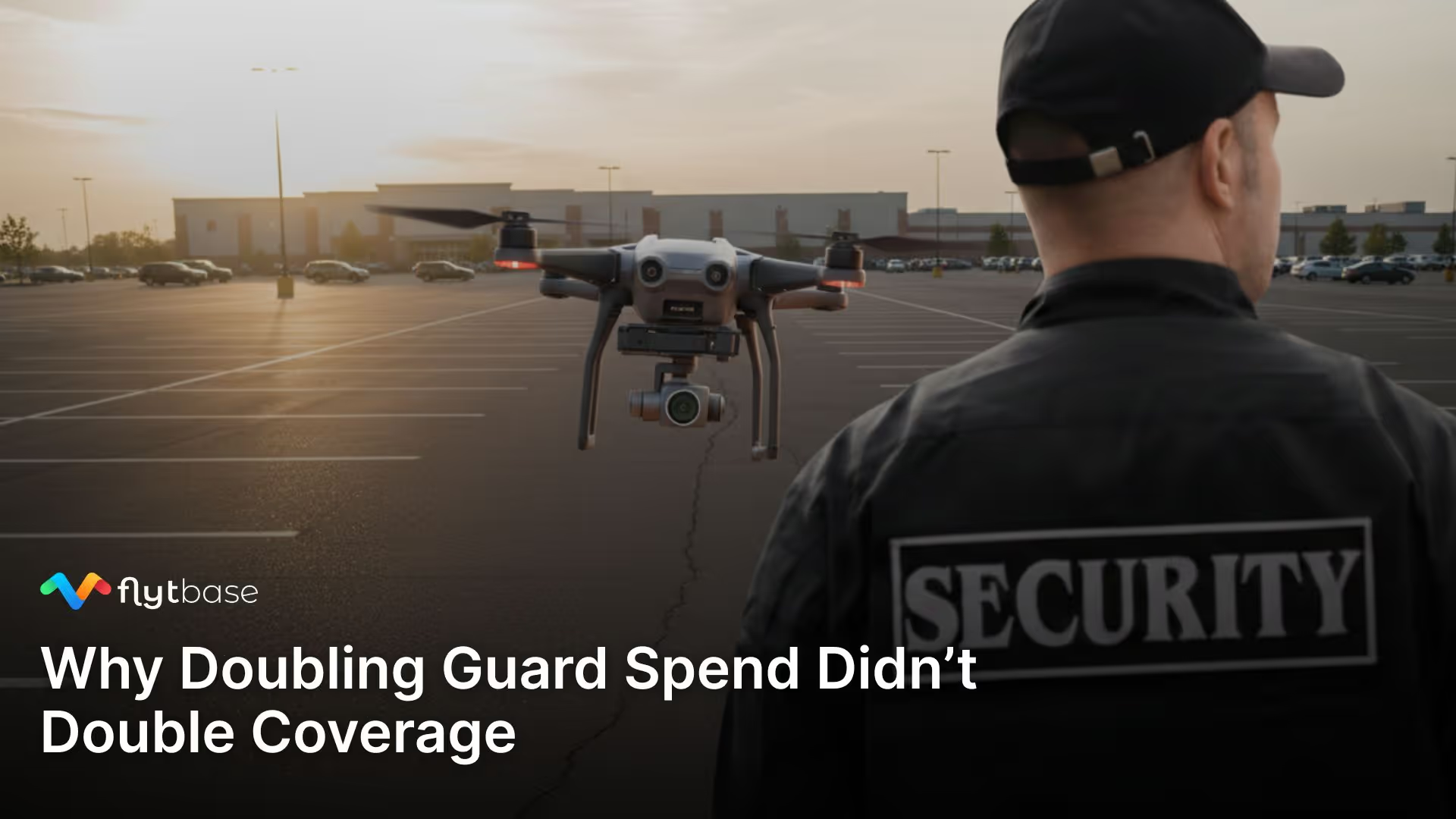
At a car dealership experiencing repeat thefts, the client was paying roughly $13,000 per month for multiple guards. Despite the spend, incidents continued. Titan restructured the site using a blended model built around autonomous detection, aerial verification, and targeted human response.
Using autonomous drones integrated with the FlytBase platform, Titan connected thermal perimeter detection, rapid drone dispatch, and their remote operations center into a single workflow. One on-site guard remained for physical response.
The new monthly cost dropped to approximately $7,000, with faster response times and full perimeter visibility. The improvement wasn’t about replacing guards with drones. It was about assigning each layer a specific role and letting FlytBase orchestrate how they worked together.
The Blended Security Stack in Practice
- Thermal perimeter detection provides continuous, 360-degree coverage across large outdoor areas where fixed cameras fall short
- Autonomous drones launch within 90 seconds to verify alarms and provide aerial context before anyone is dispatched
- Human response handles physical intervention when deterrence fails or direct action is required
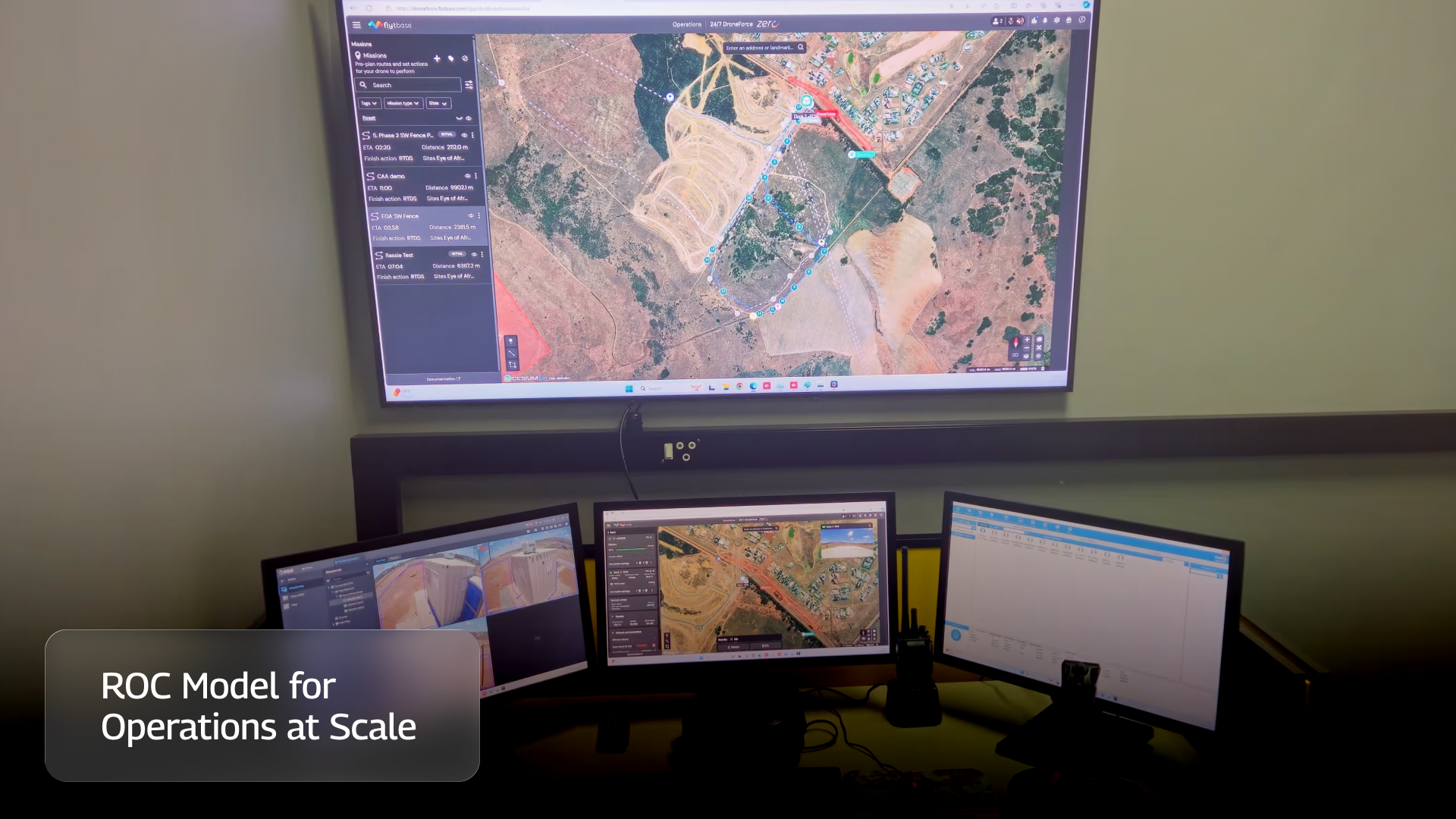
- Remote monitoring allows a centralized team to manage multiple sites, coordinate drone launches, and guide responders
- Cost outcome delivers roughly 46 percent lower monthly spend compared to guard-only deployments, with expanded coverage
Each component solves a different part of the security problem. Remove any one layer, and the system weakens.
Why the Right Mix Changes by Site
Not every site needs the same blend.
At a baseball field complex, Titan deployed autonomous patrols without on-site guards. Drones flew scheduled missions after hours, verified alarms when triggered, and escalated only when needed. Police or the client’s team handled rare response events. The lower risk profile and nearby law enforcement made a fully remote model viable.
At remote oil fields, the model shifted again. No grid power. No wired internet. No nearby response teams. Titan deployed solar-powered drone docks with Starlink connectivity and coordinated response using roving patrol vehicles. FlytBase enabled the same autonomous workflows, despite completely different infrastructure constraints.
The technology stayed consistent. The operational design changed.
Diagnosing Before Prescribing
Titan now starts every engagement with the same question: what problem keeps happening?
Instead of selling equipment, they map incident patterns, response gaps, and environmental constraints. FlytBase allows them to configure alarm triggers, autonomous missions, and response workflows based on those findings.
For one site, that meant reducing two guard positions and adding one drone dock. For another, it meant removing on-site guards entirely and operating fully remotely. The common thread was deliberate design, not default staffing. Large outdoor spaces consistently benefit from autonomous aerial verification. Entry points and interior areas still rely on fixed cameras and human presence. The blend follows the risk, not the product catalog.
Security today isn’t about choosing people or technology. It’s about designing a system where each layer does what it’s best at, costs less together, and covers more ground than any single approach alone.
Explore how security teams use FlytBase to orchestrate autonomous drones, sensors, and response workflows across complex outdoor sites.
FAQs
Find quick answers to common questions about compatibility, setup, features, and pricing
A blended security model combines automated perimeter detection, autonomous drone verification, remote monitoring, and human response. Each layer solves a specific part of the security problem. Detection and verification are automated, while humans focus only on physical response when required.
Adding guards increases labor cost but doesn’t scale coverage. Guards tend to patrol the same routes, leave blind spots, and respond slowly to perimeter breaches. On large outdoor sites, two guards still cannot monitor long perimeters effectively without aerial or automated detection.
Autonomous drones provide rapid aerial verification within minutes of an alarm trigger. They eliminate blind spots, give responders real-time video context, and deter intrusions through visibility and audio warnings. Drones reduce the need for constant foot patrols across large outdoor areas.
No. Blended systems change how guards are used. Instead of patrolling continuously, guards respond only to verified threats with full situational awareness. This improves safety, reduces fatigue, and lowers overall staffing requirements without eliminating human response.
Drone security works best at large outdoor sites such as car dealerships, logistics yards, industrial facilities, construction sites, and oil fields. These environments have wide perimeters, limited visibility, and infrequent incidents where aerial verification adds significant value.
.webp)
.svg)
.webp)
.png)
