.jpg)


Get Your Free Drone Autonomy Guide Today!

When enterprises deploy autonomous drones for security, the first question isn't about hardware. It's about people. Who operates the drones? Who responds to incidents? Who owns compliance, and who makes the call to dispatch? Without clear answers, autonomous security stalls before it starts.
The organizations scaling docked drone operations have figured out a structure that works: two teams, two roles, one integrated workflow. Security ops owns incident response. Drone ops owns readiness and compliance. Neither team steps on the other's authority, and both get the tools they need to do their job.
Here's how that model works in practice, and why it matters for enterprise adoption.
When Role Clarity Disappears, Response Times Suffer
In traditional security operations, the command center team watches cameras, receives alarms, and coordinates response. That's their environment. They live in their video management system (VMS), know the site layout, and make real-time decisions under pressure. Adding drones to that workflow creates a problem: who flies them?
Some organizations assume security operators should also become drone pilots. That rarely works. Flying drones isn't the hard part. It's managing mission planning, airspace compliance, BVLOS procedures, dock health, battery cycles, and maintaining standard operating procedures as operations scale. Those are distinct responsibilities that require different expertise.
When one team tries to handle both incident response and drone operations, delays compound. Operators toggle between dashboards. Handoffs slow down. Someone has to manually relay coordinates from an alarm system to a drone platform, and by the time the drone dispatches, the situation on-site has already changed.
The two-team model solves this by separating responsibilities where they naturally divide. Decision-making stays with security ops, and operational readiness stays with drone ops.
Security Ops Stays in Control Without Operating the Drones
Security operators don't need to become drone experts. They need to dispatch drones the same way they dispatch guards or review camera footage. They need to do it from their primary environment, with minimal friction.
That's why the FlytBase integration with Milestone XProtect puts drone dispatch inside the VMS dashboard. When an alarm triggers (perimeter intrusion, fence detection, radar alert), operators see it in Milestone alongside their camera feeds. From that same interface, they can dispatch a drone to the incident location. No system switching. No manual coordinate entry. The drone lifts off, reaches the site in seconds, and streams live aerial video back into the VMS.
Security ops teams make the call: is this worth verifying? Should we send a guard? Do we need eyes on this right now? They stay focused on the incident, not the technology. The drone becomes another response tool, not another system to learn.
This structure keeps hundreds of people in large security teams operating within familiar workflows while still gaining the coverage and speed that autonomous drones provide. They cut verification time, expand coverage without adding headcount, and adopt autonomy at a pace that fits their operational reality.
Drone Ops Owns Compliance, Readiness, and Scale
While security ops handles incident response, drone ops ensures the fleet is ready to fly. That means mission planning, regulatory compliance, airspace coordination, and maintaining dock infrastructure. It's not glamorous work, but it's critical. And it doesn't belong on a security operator's plate.
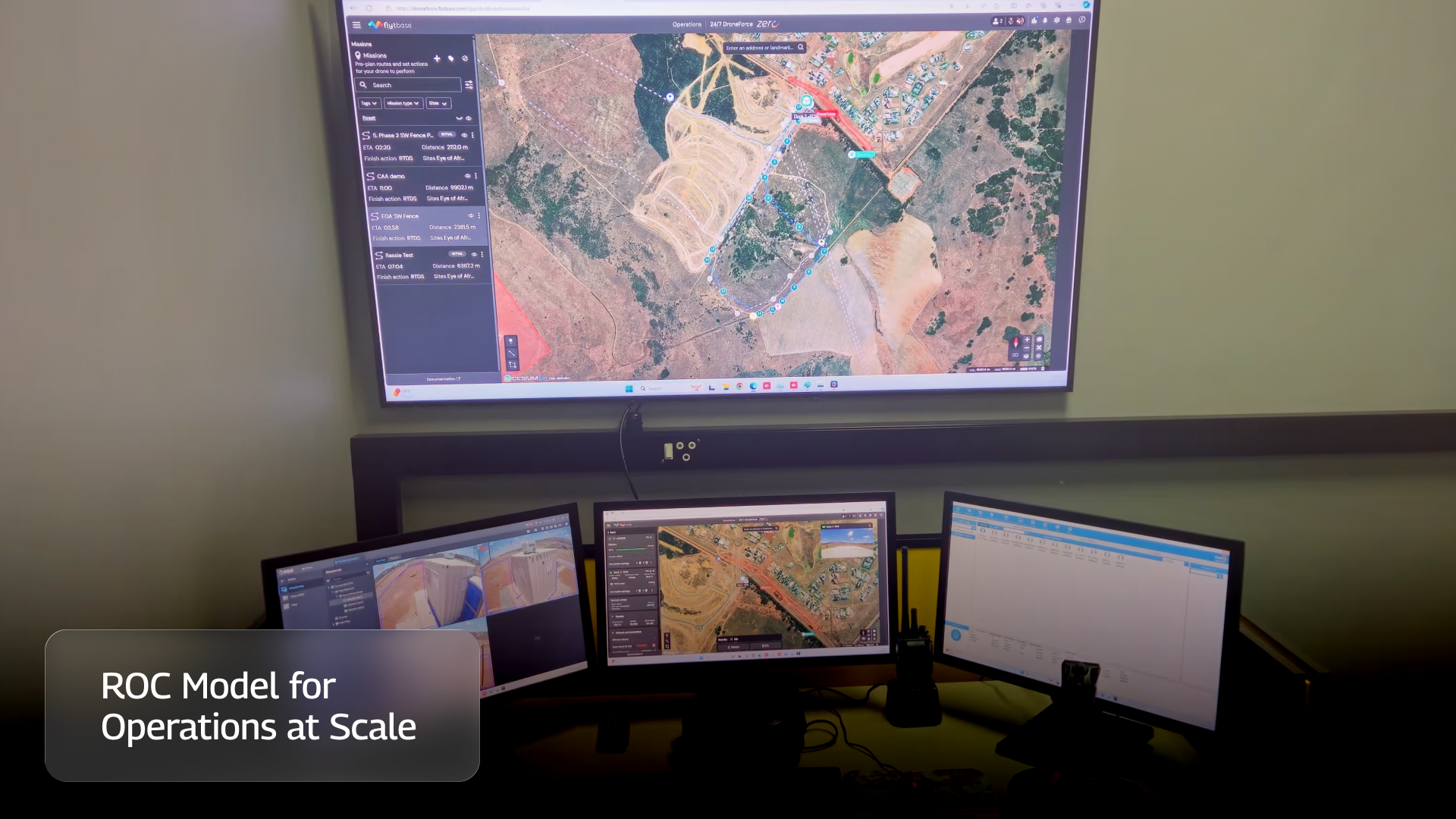
Drone ops teams manage autonomous flight calendars, schedule routine patrols, monitor battery health, handle BVLOS approvals, and build standard operating procedures as deployments scale. They work in FlytBase, where they have full visibility into fleet status, telemetry, geofences, and mission logs. When a security operator dispatches a drone from Milestone, drone ops has already ensured that drone is charged, compliant, and ready to respond.
This separation matters more as operations scale. A single drone ops center can support security teams across multiple sites. One centralized team handles compliance and readiness for ten, twenty, or fifty locations, while distributed security teams operate independently in their own VMS environments. That's cleaner team design and higher ROI per site. Security scales without doubling headcount.
In oil and gas, for example, inspection teams also use the same docked drone infrastructure for operator rounds and routine site surveys. Drone ops coordinates across security, inspection, and GIS teams, making sure missions don't conflict and airspace stays managed. Security ops never has to think about any of that.
What Enterprise Leadership Actually Gains
For security directors and operations leadership, the two-team model solves the adoption problem. Both personas get exactly the tools they need, which accelerates enterprise rollout.
Here's what changes operationally:
- Security teams operate drones without leaving Milestone. No new training burden, no workflow disruption.
- Drone ops runs safe, compliant operations through FlytBase. The platform integrates directly with the alarm and VMS systems security relies on.
- One drone ops center can serve multiple security sites. Leverage the same people across a nationwide footprint.
- Faster enterprise adoption. No organizational friction over who owns what.
The business outcome: stronger security posture without rebuilding your org chart. Sites stay protected. Teams stay in their lanes. Coverage expands without headcount scaling linearly.
How the Handoff Actually Works
The integration between FlytBase and Milestone enables seamless handoffs when incidents escalate. Security ops sees an alarm in Milestone, dispatches the drone, and watches the live feed appear in the same dashboard. Drone ops monitors fleet health in FlytBase and ensures missions execute without airspace conflicts or compliance issues.
If the situation requires ground response, security ops coordinates that next step. If it's a false alarm, they mark it resolved. If additional aerial coverage is needed, drone ops adjusts the mission in real time. No radio calls. No guesswork. Both teams see what they need to see, when they need to see it.
Organizations running at scale (partners flying 2,000 flights per month) rely on this structure. It's not theoretical. It's how autonomous security operations actually run when enterprises move beyond pilot projects and into production.
Enterprise security teams are moving beyond guards and cameras to blended infrastructure that includes autonomous drones, AI analytics, and unified command centers. The two-team model makes that scalable. Watch the recording of the webinar to know more: https://www.flytbase.com/webinars/blended-security-physical-ai-flytbase-milestone.
FAQs
Find quick answers to common questions about compatibility, setup, features, and pricing
Two teams handle different responsibilities. Security ops dispatches drones and responds to incidents from their VMS dashboard (like Milestone XProtect). Drone ops manages mission planning, regulatory compliance, BVLOS procedures, dock maintenance, and fleet readiness through platforms like FlytBase. This separation prevents delays and keeps both teams focused on their expertise.
Yes. A centralized drone ops team can handle compliance, mission scheduling, and fleet management for multiple sites—ten, twenty, or fifty locations. Security teams at each site operate independently within their own VMS environments while the drone ops center ensures all drones are charged, compliant, and ready to dispatch. This structure improves ROI and scales without doubling headcount.
Organizations running 2,000+ flights per month rely on the two-team model for production operations. Security teams expand coverage without new training burdens. Drone ops manages compliance and readiness across multiple use cases (security patrols, inspections, operator rounds). Enterprise leadership gains stronger security posture without rebuilding org charts.
Yes. In oil and gas operations, for example, inspection teams and GIS teams also use the same docked drone infrastructure. Drone ops coordinates missions across security, inspection, and site survey teams to prevent airspace conflicts. Security ops never has to manage multi-team scheduling—that stays with the drone ops center.
.webp)
.svg)
.webp)
.png)
