

Get Your Free Drone Autonomy Guide Today!

When you have built a citywide network of autonomous drones that respond to 911 calls in real time, you learn a few things about what it takes to make autonomy actually work.
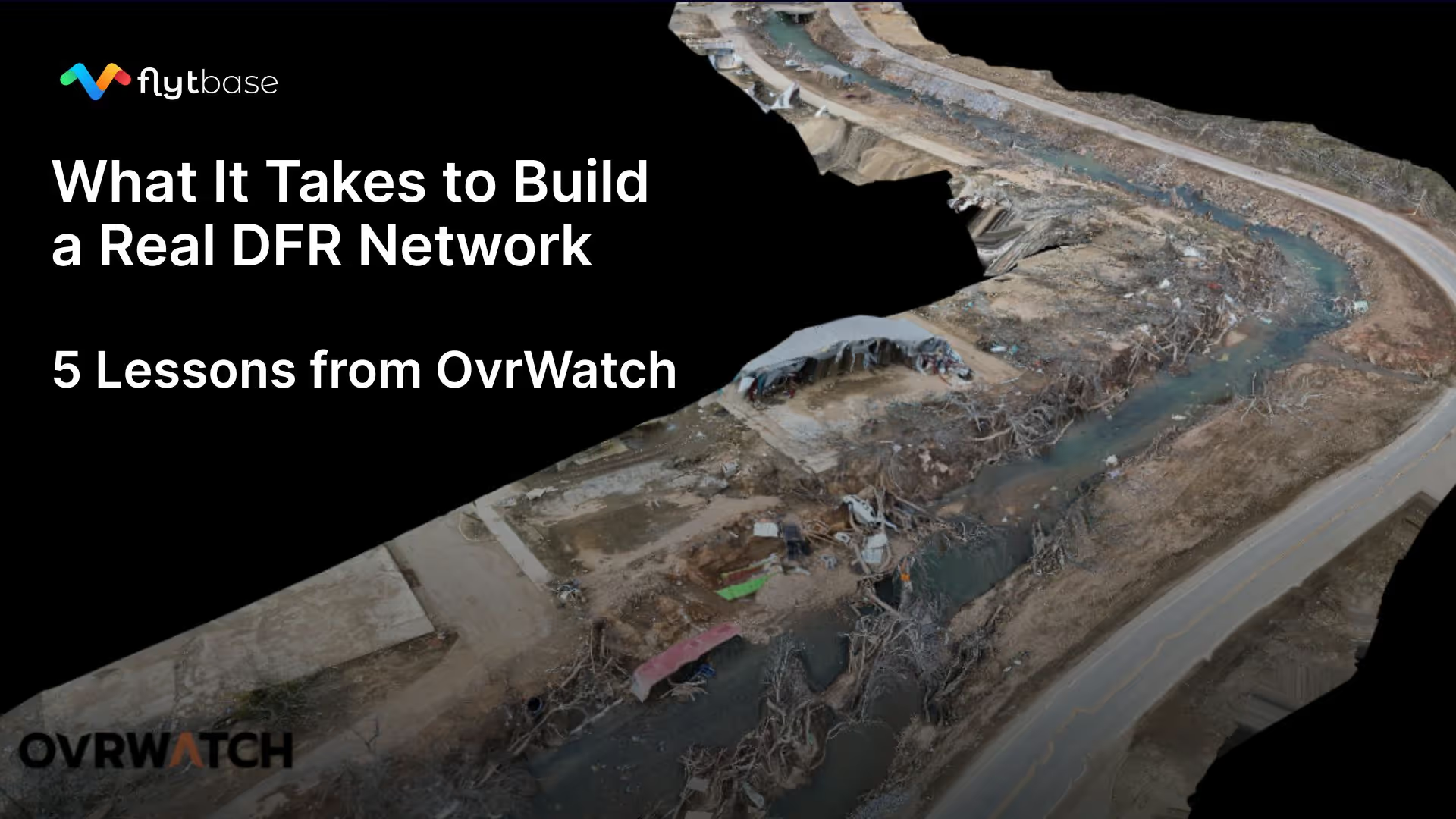
That is what Rhys Andersen, Founder and CEO of OvrWatch, discovered while designing and deploying one of the first large-scale Drone-as-First-Responder (DFR) networks in partnership with the Asheville Police Department. The program has since become a blueprint for how cities — and now campuses — can use autonomy to achieve faster, safer, and smarter security operations.
During a recent conversation with FlytBase, Rhys shared what really happens behind the buzzwords. These are his five biggest lessons from the field — practical insights that now shape how OvrWatch approaches autonomy for campus security.
1. Start Small, But Design for Scale
“We didn’t start with 13 docks. We started with four. We had to prove it worked before we could ask for more.” — Rhys Andersen, Founder and CEO, OvrWatch
Every successful autonomy program starts with a single mission loop that works every time. For Asheville PD, the goal was not to go big but to go reliable. Rhys focused on proving one thing: can a drone launch, respond, and deliver visibility faster than a human team?
Once that loop became repeatable, scaling the network was a matter of replication, not redesign. That is the difference between a demo project and a deployed system.
Lesson: You earn scale through proof, not plans.
2. Integration Makes or Breaks Autonomy
“It is never one system. It is an ecosystem. The drone, the dispatch, the video feed — everything has to talk.”
In Asheville, the breakthrough was not a new drone or a better dock but the integration between FlytBase’s platform and the 911 dispatch system.
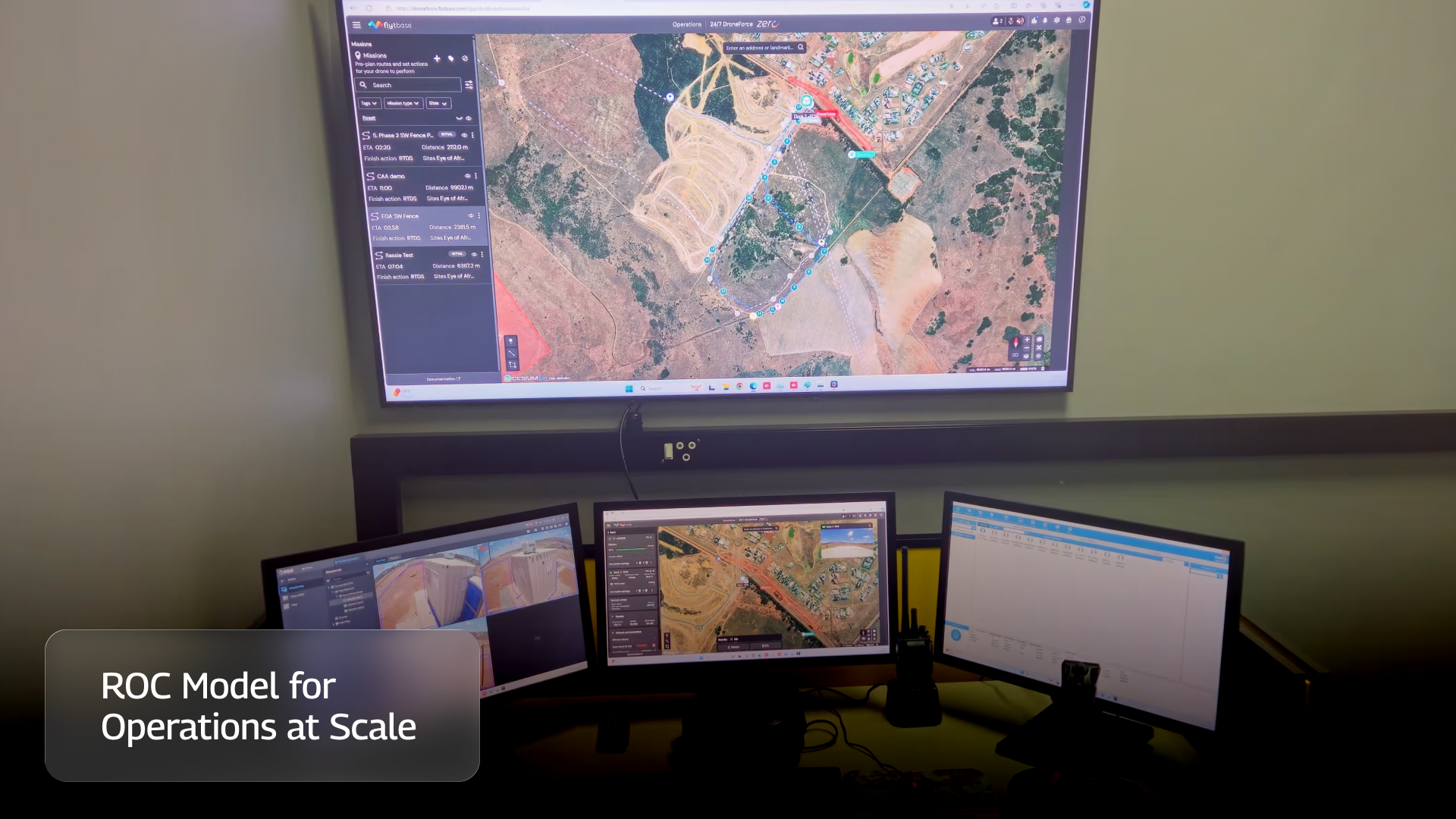
That connection allowed a drone to automatically launch when a call came in, stream live video to the command center, and provide officers with situational awareness before they even arrived.
The biggest operational leap came not from new hardware but from connecting the right systems into one autonomous workflow.
Lesson: Autonomy is not about flight. It is about orchestration.
3. People Are Harder to Integrate Than Software
“Getting buy-in from the right people was probably one of the most difficult things to do.”
Technology scales fast. People do not. Convincing dispatchers, officers, and city officials to trust an autonomous system flying over public spaces required time, transparency, and real results.
Rhys knew credibility could not be sold — it had to be earned. His team invited operators and decision-makers to witness missions, review the data, and see how response times improved. That is how skepticism turned into support.
Lesson: Trust is the slowest integration layer, but also the most critical one.
4. Distributed Systems Are Stronger Than Centralized Ones
"The network was the breakthrough, not the drone.”
Instead of relying on one centralized dock or command site, OvrWatch partnered with local businesses to host 13 distributed docking stations across Asheville.
This approach made the system more resilient, more responsive, and surprisingly more affordable. Each dock extended coverage while sharing infrastructure and maintenance costs across the network.
The result was a 24/7 aerial safety net that never slept.
Lesson: In autonomy, resilience comes from distribution, not hierarchy.
5. Comfort Is the Enemy of Autonomy
“Most teams do not fail because of bad technology. They fail because they pick what is convenient.”
The easiest route rarely builds the future. Rhys’s teams could have chosen simpler tools or stuck with manual operations, but autonomy demands discomfort — the willingness to unlearn what feels familiar.
Every new workflow, integration, and automation came with friction, but it also brought progress. That is the real mindset behind innovation: choosing what is possible, not what is easy.
Lesson: The hardest decisions lead to the biggest leaps.
From Disaster Recovery to Everyday Security
The DFR deployment in Asheville taught Rhys and his team what autonomy really requires: small, distributed systems built on trust and data.
Now, OvrWatch is applying those same principles to a new challenge — campus security.
As Rhys explained, “A campus is just a city in miniature — same problems, smaller scale, higher expectations.”
From emergency response to everyday patrols, the logic remains the same: detect, dispatch, decide, and learn. Autonomy does not replace people. It amplifies them.
About FlytBase
FlytBase enables enterprise drone autonomy through a secure, hardware-agnostic platform that integrates seamlessly with sensors, docks, and command systems. It powers real-world deployments like OvrWatch’s Asheville PD network and supports the next generation of autonomous security operations.
Learn more about how to design your own autonomous security workflow. Download this Security Playbook.
FAQs
Find quick answers to common questions about compatibility, setup, features, and pricing
The Asheville PD program, designed by OvrWatch using FlytBase’s autonomy stack, was one of the first real DFR networks in the U.S. It featured 13 distributed drone docks integrated with the 911 dispatch system — enabling instant, automated response and live video feeds for situational awareness across the city.
Rhys Andersen’s five key lessons include: Start small but design to scale. Integration drives true autonomy. Human trust is harder than technical deployment. Distributed systems create resilience. Comfort and convenience slow innovation.
Campus security faces similar challenges as city-level emergency response — multiple zones, limited visibility, and delayed response. The same DFR principles can be applied to create autonomous patrols, alarm verification, and rapid incident response across campuses.
FlytBase provides the autonomy software that connects drone hardware, docks, and existing command systems into one integrated platform. It enables automated take-off, landing, live video streaming, and data management — allowing teams to operate drone networks safely, securely, and at scale.
.webp)
.svg)
.webp)
.png)
