

Get Your Free Drone Autonomy Guide Today!


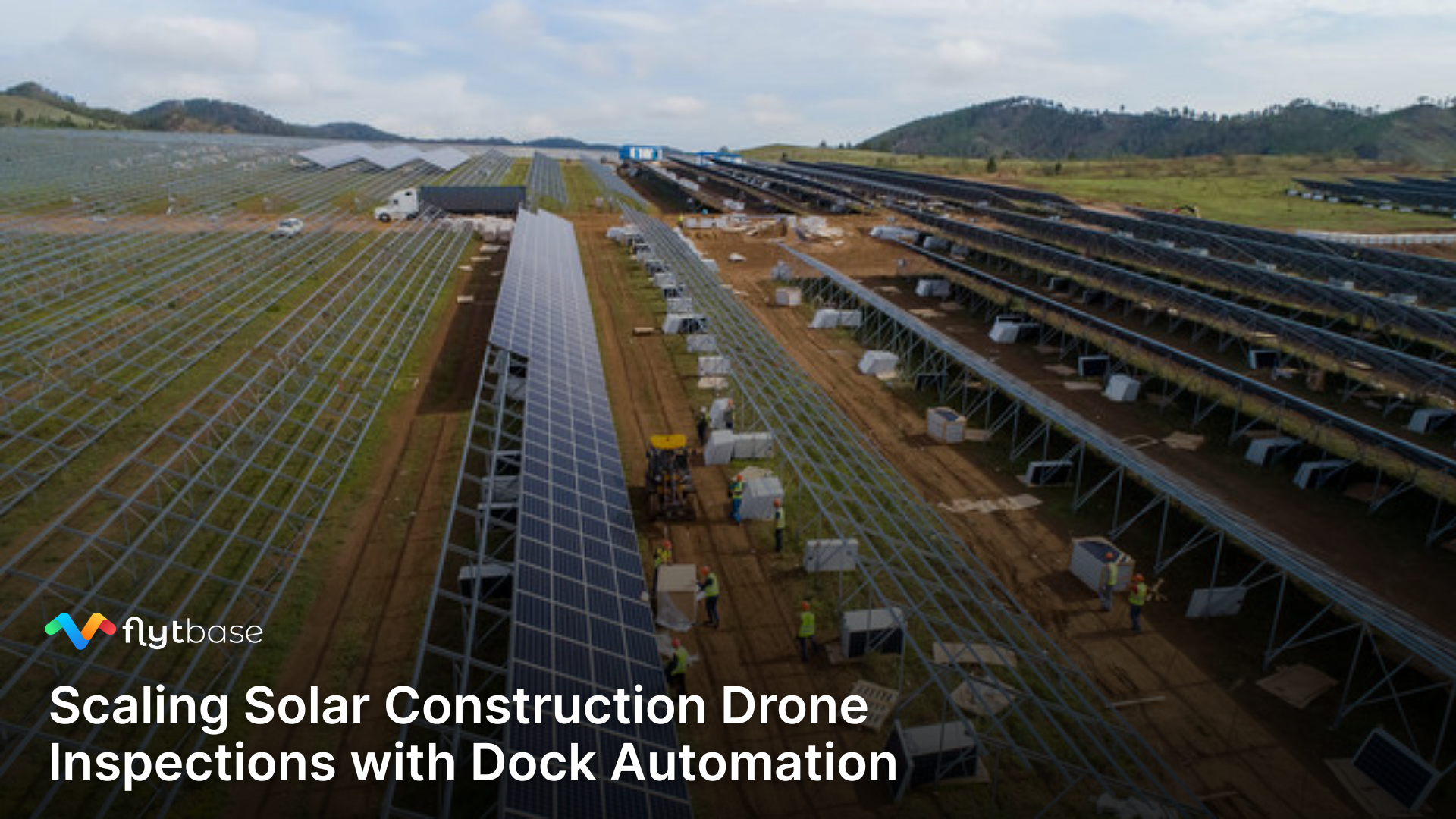
Utility-scale solar construction is expanding rapidly across North America. Sites now stretch across thousands of acres, with tens of thousands of piles supporting module arrays that must be aligned with engineering precision.
On a 2,100-acre solar construction site, approximately 20,000 piles may be installed. If one piling is off by just a few inches, that deviation can cascade across entire rows of modules. What appears to be a minor error can compromise alignment across a large section of the build.
Historically, validating that alignment required manual survey checks. Teams would inspect piles individually using GPS receivers and field crews. On sites of this scale, that process could take close to a month. By the time validation was complete, new installations were already underway.
The issue was not inspection capability. It was inspection frequency.
The Operational Gap in Solar Construction Inspections
Manual inspections provided accuracy but lacked speed. Remote-controlled drone mapping reduced field time significantly, but the workflow still included travel, data transfer, and processing delays. Construction managers often received actionable data hours or days after capture.
In active solar construction environments, that delay introduces risk. When inspection data arrives too late, corrective actions become more complex and more expensive. Misalignment spreads. Rework increases. Schedules tighten. Solar construction drone inspection programs that operate weekly or periodically cannot keep pace with build velocity. What changes outcomes is daily visibility.
From Drone Flights to Daily Inspection Systems
Dock-based drone deployments allow aircraft to remain on-site, enabling automated missions at sunrise without requiring pilot travel.
According to Eric, on large solar builds, daily operations can involve:
- Approximately 10,000 images per dock per day
- 20,000 images per site per day
- 50 to 60 gigabytes of data per dock per day
- 6 to 8 hours of flight activity
The real objective is not image capture. It is turnaround. In mature deployments, the service-level target from capture to processed deliverable is between 16 and 20 hours. That means solar construction managers can review validated orthomosaics and anomaly reports the next day.
Instead of monthly validation cycles, teams move to near-daily correction cycles. This shift transforms drone inspection from a reporting function into a construction control mechanism.
Automating the Solar Drone Data Pipeline
At this scale, drone operations must be automated end-to-end. After landing, imagery uploads immediately via on-site connectivity. Once the final file completes upload, a webhook triggers automated stitching into a 2D orthomosaic. That orthomosaic is then analyzed against engineering and CAD models. AI-driven tagging identifies piling misalignment, array deviation, and other structural inconsistencies.
Finally, deliverables are pushed directly into the client’s platform. One stalled image can block the entire chain. To prevent processing delays, timeout parameters ensure that workflows continue even if minor upload disruptions occur.
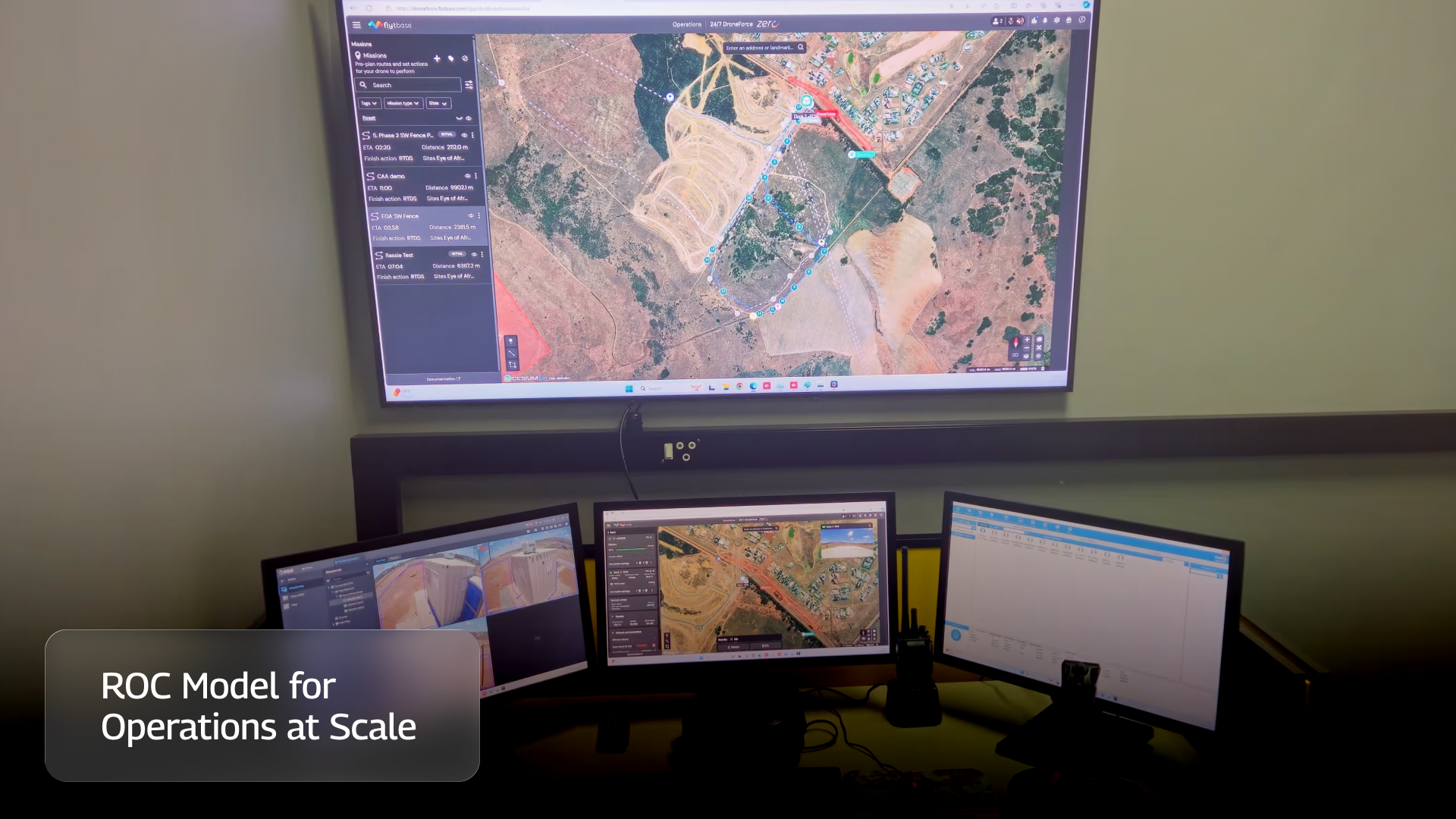
When managing tens of thousands of images daily, solar drone inspection depends on reliable orchestration. Without workflow automation, scale becomes unsustainable. This is where enterprise-grade fleet and workflow management platforms such as FlytBase play a critical role in enabling multi-site dock operations.
Scaling Solar Drone Inspections Beyond Pilot Programs
Deploying one dock proves capability. Scaling to twelve docks in under a year proves demand. Planning toward fifty or more docks requires infrastructure.
As dock counts increase, operational focus shifts toward:
- Battery lifecycle tracking under high daily flight volumes
- Maintenance documentation and reporting discipline
- Connectivity resilience and redundancy
- Multi-drone oversight under regulatory waivers
Each dock may execute ten to fifteen flights per day. Battery cycle limits are reached faster than many operators anticipate. Maintenance scheduling becomes a structured program rather than an ad hoc activity.
At scale, drone inspection is no longer a field experiment. It becomes an engineered inspection system.
ROI in Solar Construction Drone Inspection
Financially, dock-based solar inspection programs can operate within strong margin profiles. However, the more meaningful return on investment lies in avoided rework and protected schedules.
When inspection latency drops from weeks to under 24 hours:
- Deviations are corrected earlier
- Cascading alignment errors are minimized
- Project timelines remain intact
- Stakeholder confidence improves
For renewable EPCs and asset owners, daily autonomous inspection is increasingly becoming a risk mitigation strategy rather than a technology upgrade.
The Strategic Question
The question is no longer whether drones can map a solar construction site. The question is whether your inspection system can keep pace with construction velocity. Weekly inspection cycles may have been sufficient five years ago. In today’s accelerated renewable build environment, daily automated inspection is emerging as the new operational baseline.
If you are evaluating how to scale solar construction drone inspections across multiple sites, explore how FlytBase enables automated dock orchestration, multi-site fleet management, and workflow integration for enterprise deployments.
Or watch the full webinar discussion to see how large-scale solar inspection programs are being built in practice.
FAQs
Find quick answers to common questions about compatibility, setup, features, and pricing
Solar construction drone inspection uses drones to monitor large-scale solar build sites, capture aerial imagery, and detect piling misalignment or structural deviations. Dock-based systems enable daily automated inspections without requiring on-site pilots.
On large sites with thousands of pilings, small alignment errors can cascade across entire rows of modules. Daily inspections reduce latency, allowing teams to correct deviations within 24 hours instead of weeks.
After landing, images upload automatically. A webhook triggers stitching into orthomosaics, followed by AI-driven anomaly detection aligned with engineering drawings. Automated workflows ensure turnaround within 16 to 20 hours.
Key challenges include managing battery lifecycle, maintaining hardware in dusty environments, ensuring reliable connectivity, and automating high-volume data pipelines across multiple sites.
The primary ROI comes from reducing inspection latency. By identifying alignment issues early, projects minimize rework, protect schedules, and reduce cascading structural errors.
.webp)
.svg)
.webp)
.png)
