
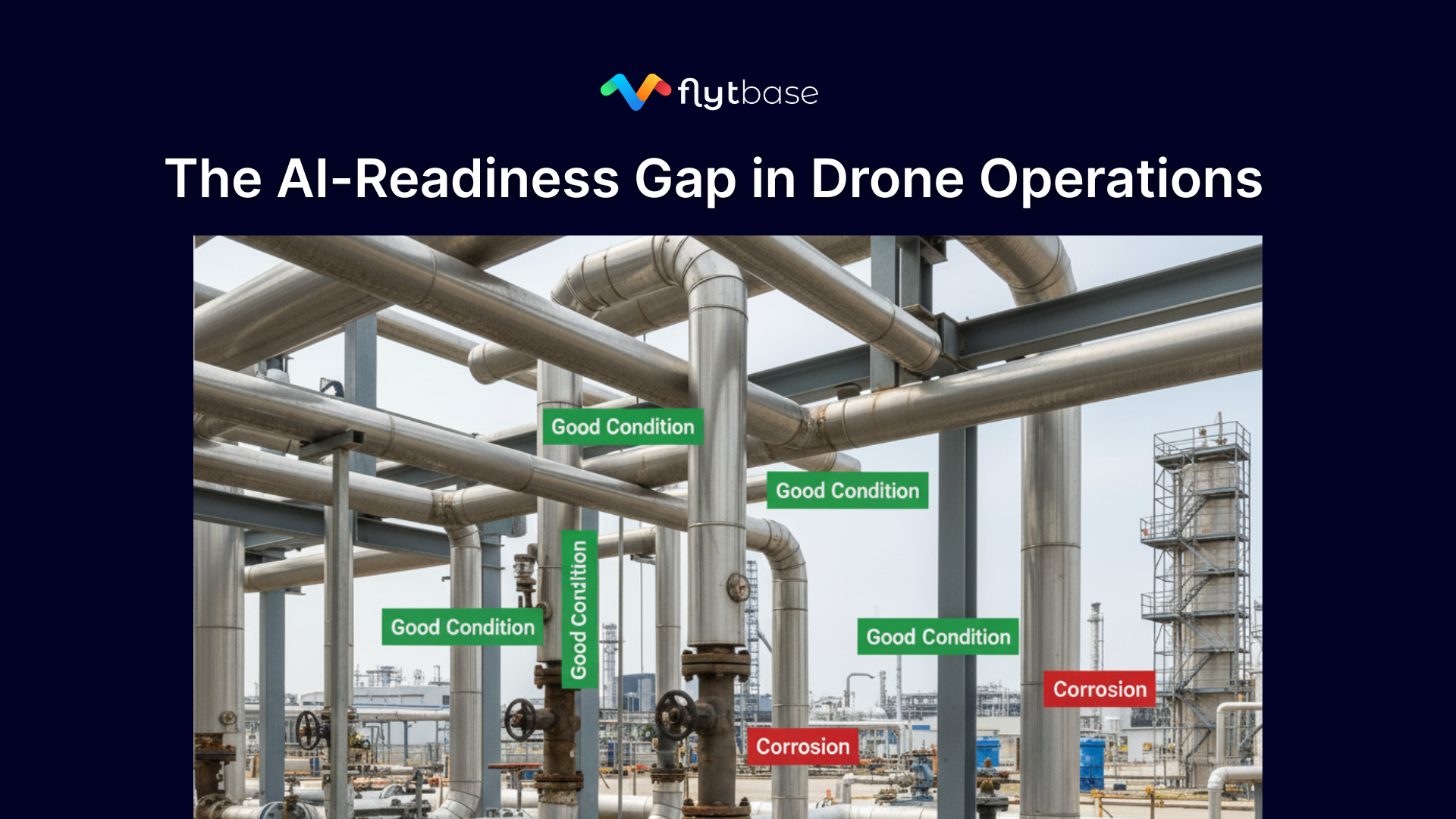
If you walk into most drone program meetings today, the conversation still revolves around specs: flight time, payload capacity, weather rating. But the truth is, those aren't the factors separating success from frustration anymore.
We've seen it across industries: the real differentiator isn't the aircraft, it's the intelligence behind it. And that's where most programs stall before they even take off.
The Misunderstanding That Costs Millions
When organizations buy autonomous drones, they think they're buying a flying camera. In reality, they're implementing an AI system that happens to fly, and that distinction changes everything.
The hardware simply executes what the AI decides: what to capture, when to analyze, how to respond. So if the AI isn't trained, integrated, or monitored properly, the drone becomes little more than an expensive tripod with wings.
What "AI-Ready" Actually Means
AI readiness isn't about installing more GPUs or hiring data scientists; it's about aligning people, data, and systems so autonomy can learn and adapt.
Here's what separates AI-ready teams from everyone else:
- They treat flight data as a living asset, not just stored footage.
- They integrate AI loops into workflows, so insights trigger real decisions — not PowerPoint slides.
- They train models on local context, not just generic image sets.
- They monitor AI like equipment, with calibration, version control, and audit logs.
When those habits exist, autonomy scales naturally. When they don't, every new use case becomes a rebuild.
The 3 Levels of Operational Intelligence
After hundreds of deployments, we've learned there are three clear stages:
Level 1 — Automation: You plan flights, collect data, analyze manually. It's safer and faster, but not transformative.
Level 2 — Assisted Intelligence: AI detects anomalies and patterns automatically. Teams respond to alerts instead of footage. Efficiency soars.
Level 3 — Autonomy: Systems self-optimize. Flights adjust based on weather, equipment health, and production priorities — without human input.
Most organizations are stuck between Levels 1 and 2 because their infrastructure and culture weren't built for AI to breathe.
Where the Gaps Appear
- Data Bottlenecks: Drone missions generate terabytes of video and sensor data. Without pipelines to process it in real time, you're drowning in footage instead of learning from it.
- Skill Mismatch: Operators know flight; analysts know data. Few teams bridge both, the sweet spot where autonomy truly matures.
- Integration Islands: Disconnected systems mean insights never reach the people who could act on them. AI becomes a side project, not a control system.
- Expectation Traps: AI isn't magic out-of-the-box. It learns. Teams expecting perfection on Day 1 often give up before performance compounds.
How Leading Teams Close the Gap
At FlytBase, we've helped enterprises in mining, energy, and logistics cross this bridge successfully. The consistent formula looks like this:
- Start small, but integrate deep. Connect drone data with maintenance, safety, or ERP systems from the very first pilot.
- Design for feedback loops. Every flight trains the next one — refine your AI like you'd tune an engine.
- Invest in hybrid talent. Build roles that blend flight operations with data operations.
- Measure outcomes, not flights. Track inspection time saved, risks reduced, downtime prevented — those prove AI maturity.
A Quick Reality Check
If your "autonomous" system still requires someone to babysit uploads, manually review footage, and write reports, it's not autonomous — it's augmented manual labor. The AI-readiness gap isn't about future tech; it's about operational discipline today.
What Happens When You Get It Right
Once AI readiness clicks, something remarkable happens:
- Inspections that took hours finish in minutes.
- Safety incidents drop to zero because people stay out of danger zones.
- Maintenance moves from reactive to predictive.
- Teams make decisions in real time, not after weekly reviews.
That's not hype — that's what every FlytBase deployment aims to deliver.
The Bottom Line
Autonomy isn't a product you buy; it's a capability you build. And AI readiness is the foundation that makes every other investment worthwhile. If you're serious about scaling beyond flight hours into real operational intelligence, start with the AI. The drones will follow.
See how FlytBase helps enterprises close the AI-readiness gap and unlock full autonomy. Watch how the FlytBase AI-R (Aeriel Intelligence for Robots) works.