
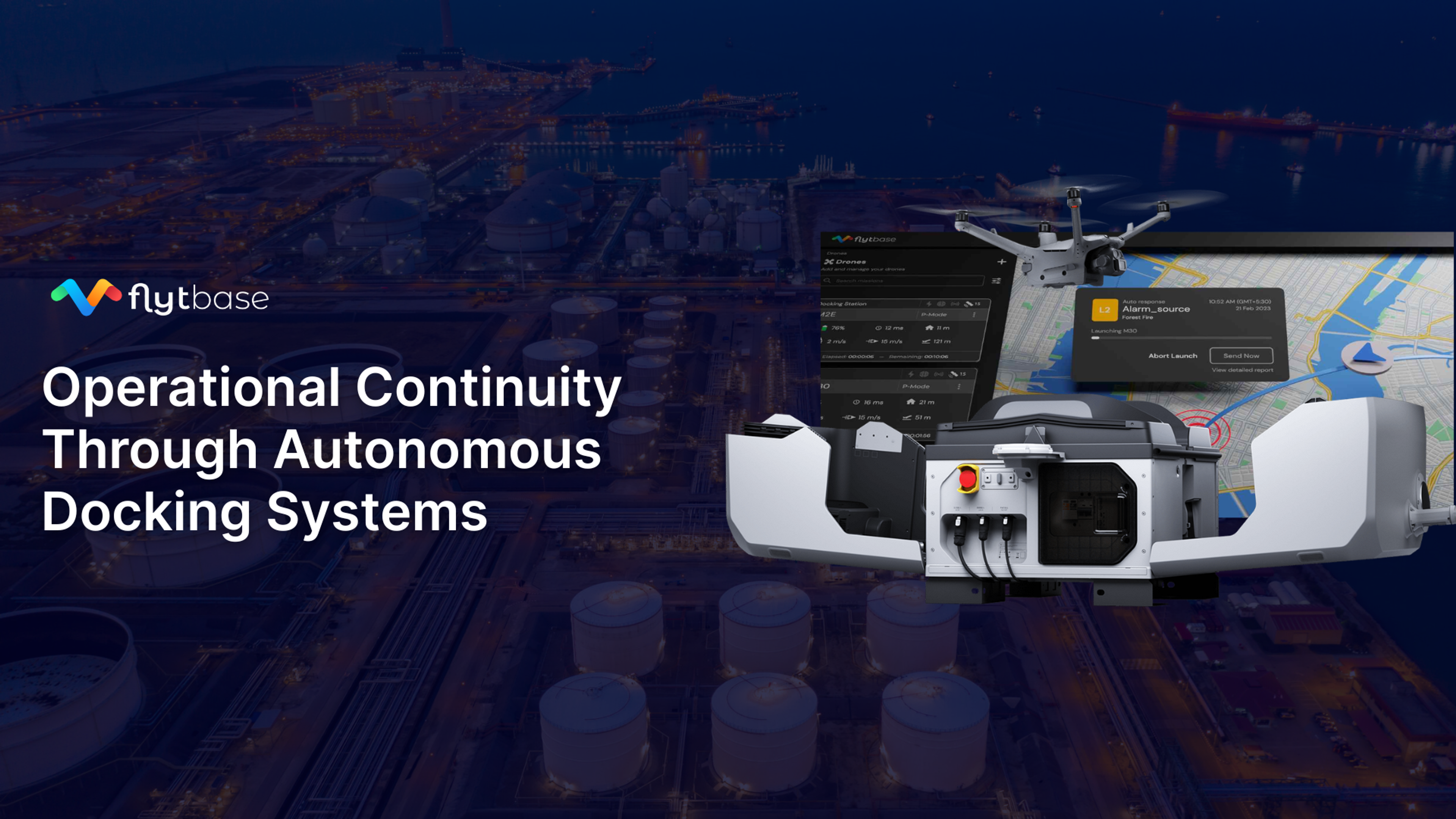
As drone programs expand from pilot projects to enterprise-scale deployments, maintaining consistent uptime becomes a critical priority. Continuous operations require not only reliable hardware but also automation that minimizes human intervention.
Autonomous docking systems are central to achieving this objective. They enable drones to operate 24/7, performing missions, recharging, and uploading data without manual assistance. By ensuring operational continuity, these systems turn drone programs into dependable infrastructure assets rather than experimental technology.
The Role of Docking Systems in Enterprise Operations
Docking stations serve as the physical and digital foundation for autonomous drone missions. Each station provides housing, power, communication, and environmental protection for the drone, allowing it to operate reliably in varied conditions.
Core functions of a modern docking system include:
- Automated battery charging and health diagnostics
- Secure data upload through edge or cloud connections
- Weatherproof protection against heat, rain, and dust
- Precision landing and automated readiness verification
- Integrated sensors for performance and safety monitoring
By eliminating manual pre- and post-flight procedures, docking systems enable true end-to-end automation.
Redefining Uptime Through Automation
In traditional drone operations, flight readiness and maintenance depend on human scheduling. Autonomous docking removes these dependencies by combining hardware reliability with intelligent scheduling.
Key operational advantages include:
- Immediate redeployment after charging cycles
- Automated mission scheduling and route updates
- Remote health monitoring and maintenance alerts
- Continuous operation across day and night cycles
For organizations operating in sectors such as utilities, energy, or logistics, this automation ensures uninterrupted data collection and faster response to operational or security events.
Reducing Operational Costs
Autonomous docking systems directly reduce labor and downtime costs. By automating repetitive tasks, they enable leaner operations while maintaining consistency across multiple sites.
Typical cost benefits include:
- Reduced on-site staffing requirements
- Lower travel costs for maintenance personnel
- Minimized delays due to weather or scheduling conflicts
- Extended drone lifespan through consistent charging and diagnostics
A global mining enterprise using FlytBase-integrated docking systems achieved a 90 percent reduction in inspection time and significantly lowered maintenance overhead by standardizing autonomous operations across multiple sites.
Remote Management and Predictive Maintenance
Docking systems are not only charging stations but also intelligent diagnostic hubs. They continuously track drone health parameters such as battery performance, temperature, and sensor calibration.
Predictive capabilities include:
- Early identification of potential hardware issues
- Automated scheduling of maintenance tasks
- Centralized visibility across all deployed systems
- Performance tracking for operational optimization
FlytBase orchestration integrates with these diagnostic systems to deliver predictive maintenance insights, ensuring that fleet reliability improves with every mission.
Integration with Fleet Management Platforms
Docking systems reach their full potential when integrated with enterprise fleet management platforms. Unified orchestration enables centralized control, multi-site mission scheduling, and consolidated reporting.
Integration benefits:
- Seamless mission planning across all docks
- Real-time synchronization of flight and maintenance data
- Standardized reporting for compliance and audit readiness
- Secure connectivity through encrypted communication channels
FlytBase provides the software infrastructure that links autonomous docking systems to enterprise networks, creating a continuous operational ecosystem that is both scalable and secure.
Building Redundancy and Fail-Safe Operations
Operational continuity depends on redundancy and safety assurance. Docking systems designed for enterprise use incorporate multiple fail-safe mechanisms to protect both hardware and mission outcomes.
Common redundancy features include:
- Backup power systems for uninterrupted operation
- Automated weather detection and safety landing protocols
- Failover communication channels for remote management
- Physical access controls and tamper detection
These systems ensure that operations remain functional and secure, even during unexpected technical or environmental disruptions.
Case Study: Infrastructure Monitoring at Scale
A leading energy utility deployed a network of autonomous docking systems across multiple substations to automate infrastructure inspections.
Results achieved:
- 95 percent reduction in inspection delays due to weather or scheduling
- 80 percent improvement in asset visibility and reporting accuracy
- Consistent 24/7 monitoring with zero manual intervention
- Compliance-ready audit documentation generated automatically
This case demonstrates how autonomous docking transforms drone deployments into self-sustaining, always-available operational assets.
Future of Autonomous Infrastructure
As enterprises scale their drone programs, autonomous docking will evolve into a standardized infrastructure component. Combined with AI analytics and cloud orchestration, these systems will enable continuous monitoring networks capable of predictive response and data-driven decision-making.
FlytBase is leading this transition by providing the software layer that connects autonomous hardware to enterprise workflows, ensuring every docked drone contributes to a resilient and efficient operational ecosystem.
Take the Next Step Toward Continuous Autonomy
Enable uninterrupted drone operations through FlytBase's integrated orchestration and docking management platform. Discover how global enterprises are achieving 24/7 uptime and operational resilience through automation.
Explore Autonomous Docking Solutions | Request a Consultation