.avif)


Get Your Free Drone Autonomy Guide Today!


At 3:15 AM, Jake Morrison's phone buzzed with an alert from his company's 25-acre facility in the Permian Basin. Sensor readings indicated a potential methane leak somewhere among the 17 tanks and 12 compressors scattered across the site. Under the EPA's new Subpart OOOOc regulations, he had hours—not days—to investigate and report, or face fines reaching $120,000 for a ~100-metric-ton violation.
The traditional approach would mean dispatching a team with handheld sniffers for a 3.5-hour manual inspection, exposing workers to hazardous areas while precious time ticked away. Instead, Jake launched an autonomous drone equipped with advanced detection sensors. Within 45 minutes, the system had mapped the entire facility, pinpointed the exact leak location, and generated EPA-compliant reports—a 60% reduction in inspection time that could mean the difference between compliance and costly penalties.
This scenario plays out regularly across oil and gas operations nationwide, highlighting why automated methane monitoring has become essential for regulatory compliance and operational efficiency.
How Much Do EPA Methane Violations Cost Oil and Gas Companies?
The EPA's Subpart OOOOc methane regulations, effective 2026, introduce unprecedented financial penalties for methane emissions violations at oil and gas facilities. With regulatory fines reaching $1,200 per metric ton, a single significant fugitive emission can devastate quarterly profits and trigger increased regulatory scrutiny.
Consider the real compliance costs facing oil and gas operators today:
- Direct EPA Penalties: $120,000+ for major methane violations
- Lost Production: $45,000 per day during extended facility shutdowns
- Manual Inspection Labor Costs: $2,800 per manual inspection team deployment
- Safety Incidents: $2.3 million average cost of serious workplace injuries in oil and gas
- Regulatory Scrutiny: Increased inspection frequency and oversight
Oil and gas companies using traditional manual inspection methods face a methane compliance crisis. Industry data shows that 73% of facilities struggle to meet new EPA monitoring frequency requirements, while 45% report at least one methane regulatory violation in the past 18 months.
ROI Calculator: Autonomous Drone vs. Manual Methane Monitoring
Autonomous drone technology eliminates the fundamental limitations of manual methane inspection while delivering superior compliance results. Here's how leading oil and gas operators are achieving 60% time reductions and zero EPA regulatory violations:
- 60% faster methane inspections: 45 minutes vs. 3.5 hours for comprehensive facility monitoring
- 24/7 availability: Respond to fugitive emission alerts at any hour without crew dispatch delays
- Zero exposure risk: Keep personnel away from hazardous areas during gas leak investigations
- Perfect EPA documentation: Automated EPA-compliant reports with geotagged evidence
- Scalable operations: Monitor multiple oil and gas facilities with centralized control
"We are able to inspect our largest facility (25 acres, 17 tanks, 12 compressors) in 45 minutes with the Drone and OGI 640. Handheld operations usually average 3.5 hours to inspect the same facility. We estimate a 60% efficiency increase when using drone based OGI. We see a 35% increase in efficiency at minimum on our average sized facilities (about half the size of our largest facility), not to mention it is significantly safer..." — Upstream Operator, Permian Basin
How Does FlytBase Platform Enable EPA Compliance?
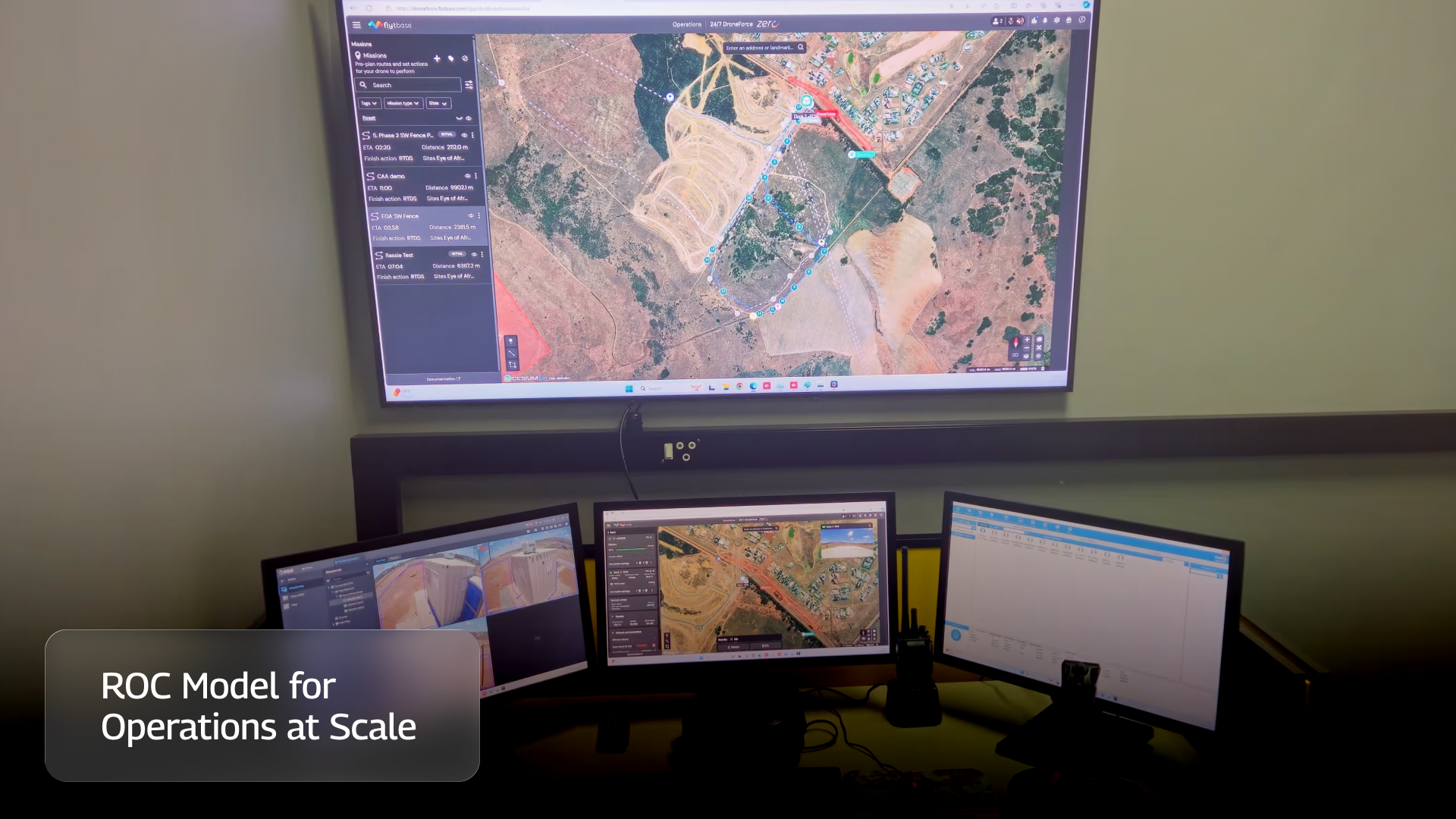
FlytBase's enterprise drone autonomy platform serves as the central nervous system that transforms individual hardware components into a comprehensive monitoring solution. The platform orchestrates mission planning, real-time analytics, and seamless integration with existing SCADA and GIS systems.
It enables both routine scheduled inspections and on-demand emergency response. Real-time detection alarms trigger immediate notifications, while post-processing quantification provides detailed analysis through the integrated dashboard.
- Advanced Safety Protocols: Autonomous operations eliminate worker exposure to hazardous areas while maintaining comprehensive monitoring coverage. The platform includes built-in failsafe mechanisms, geofencing capabilities, and emergency response protocols for safe operations in challenging industrial environments.
- Operational Excellence: Beyond time savings, FlytBase enables 24/7 autonomous operations and scalable fleet management across multiple facilities. The platform's AI-R (Aerial Intelligence for Robots) module adds real-time AI analytics, reducing the need for constant human monitoring while improving detection accuracy.
- Regulatory Compliance: Automatically generates EPA-compliant reports with geotagged evidence and time-stamped documentation. The platform maintains SOC 2 Type II, ISO 27001, and GDPR compliance, ensuring sensitive facility data remains secure.
- Enterprise Integrations: Through FlytBase Flinks, the platform connects with Video Management Systems (VMS), SCADA networks, and third-party analytics platforms, enabling real-time data sharing with remote operations centers.
Key Applications
FlytBase's platform delivers comprehensive methane monitoring solutions that adapt to diverse operational requirements across the entire oil and gas value chain:
Routine Facility Inspections: Both visual detection and quantitative analysis configurations support scheduled monitoring across wellheads, compressor stations, tank farms, and refinery complexes. The choice between configurations depends on inspection frequency requirements, facility layout, and detection precision needs rather than facility type.
Continuous Surveillance: Autonomous dock-based systems enable 24/7 monitoring for critical infrastructure including pipeline networks, processing facilities, and storage operations. This approach ensures immediate leak detection and response capabilities across any oil and gas installation requiring constant oversight.
Emergency Response: On-demand deployment capabilities allow rapid investigation of suspected leaks or incidents regardless of facility type. The platform's ability to dispatch drones remotely and provide real-time data to emergency response teams enhances safety across upstream production sites, midstream transportation networks, and downstream processing facilities.
Compliance Documentation: All configurations generate EPA-compliant reports with geotagged evidence and detailed audit trails suitable for regulatory submissions across any oil and gas operation. The platform's comprehensive data management ensures consistent documentation standards whether monitoring a single wellhead or an integrated refinery complex.
Why Are Oil and Gas Companies Switching to Autonomous Monitoring Now?
The EPA's evolving methane regulations continue to tighten compliance requirements for oil and gas operations. Early adopters of autonomous drone monitoring technology are positioning themselves ahead of these regulatory changes while competitors struggle with outdated manual inspection methods.
With the 2026 full EPA implementation deadline approaching, oil and gas facilities that implement autonomous drone systems now will have operational advantages and proven compliance records when methane enforcement intensifies.
Don't Wait for the Next $120,000 EPA Methane Fine
Schedule a free oil and gas facility assessment and discover how autonomous drone monitoring can eliminate your EPA regulatory risk while delivering immediate ROI and ensuring methane compliance.
Get Your Custom ROI Analysis:
- Facility-specific methane monitoring cost savings projection
- EPA compliance gap analysis
- Autonomous drone implementation timeline and investment requirements
- Live demonstration of methane detection capabilities
FAQs
Find quick answers to common questions about compatibility, setup, features, and pricing
The EPA's Subpart OOOOc regulations, effective 2026, impose fines up to $1,200 per metric ton of methane emissions. A single significant violation can result in penalties exceeding $120,000, plus operational shutdowns and regulatory scrutiny.
Autonomous drones complete facility inspections in 45 minutes versus 3.5 hours for manual methods, achieving a 60% efficiency improvement while maintaining 24/7 availability and zero worker exposure risk.
Yes. Leading oil and gas operators using drone-based methane monitoring report zero EPA regulatory violations through automated, EPA-compliant detection and documentation.
Organizations save an average of $284,000 annually through reduced labor costs, avoided EPA fines, and decreased downtime. Payback period is approximately 4.2 months with a 340% ROI.
FlytBase integrates with SCADA systems, GIS platforms, and VMS environments to enable seamless mission orchestration, real-time analytics, and automated EPA-compliant reporting across distributed facilities.
.webp)
.svg)
.webp)

.png)
