

Get Your Free Drone Autonomy Guide Today!

Every night across warehouses, energy plants, and industrial yards, patrol vehicles circle for hours: two guards, one pickup truck, a few liters of fuel every round. It’s routine, it’s necessary, and it’s almost invisible in most sustainability reports.
Vehicle-based patrols may seem minor, but across large enterprises, they add up to significant, often unreported carbon emissions. These aren’t categorized under transport or logistics; they sit quietly in “operations,” where they rarely get counted.
What appears to be a small operational task is, in reality, a hidden sustainability gap within enterprise security and inspection programs.
The blind spot in ESG reporting
Enterprises now measure energy, logistics, and manufacturing emissions with precision. But recurring, small-scale activities — like daily site patrols — often go unmeasured. Fuel logs are maintained. Mileage is tracked. Yet when those numbers aren’t consolidated across shifts and regions, their total carbon impact remains invisible.
The result: emissions that occur daily, predictably, and preventably, but never appear in ESG disclosures.
Why design matters more than data
The opportunity for sustainability improvement doesn’t always lie in better measurement; it lies in better system design.
Replacing fuel-based patrols with electric, autonomous alternatives is one of the simplest ways to cut operational emissions without introducing new reporting complexity. That’s where automation comes in.
From fuel to foresight
When enterprises deploy autonomous, docked drones powered by FlytBase, they don’t just increase security visibility; they remove vehicle kilometers, idle time, and human travel altogether.
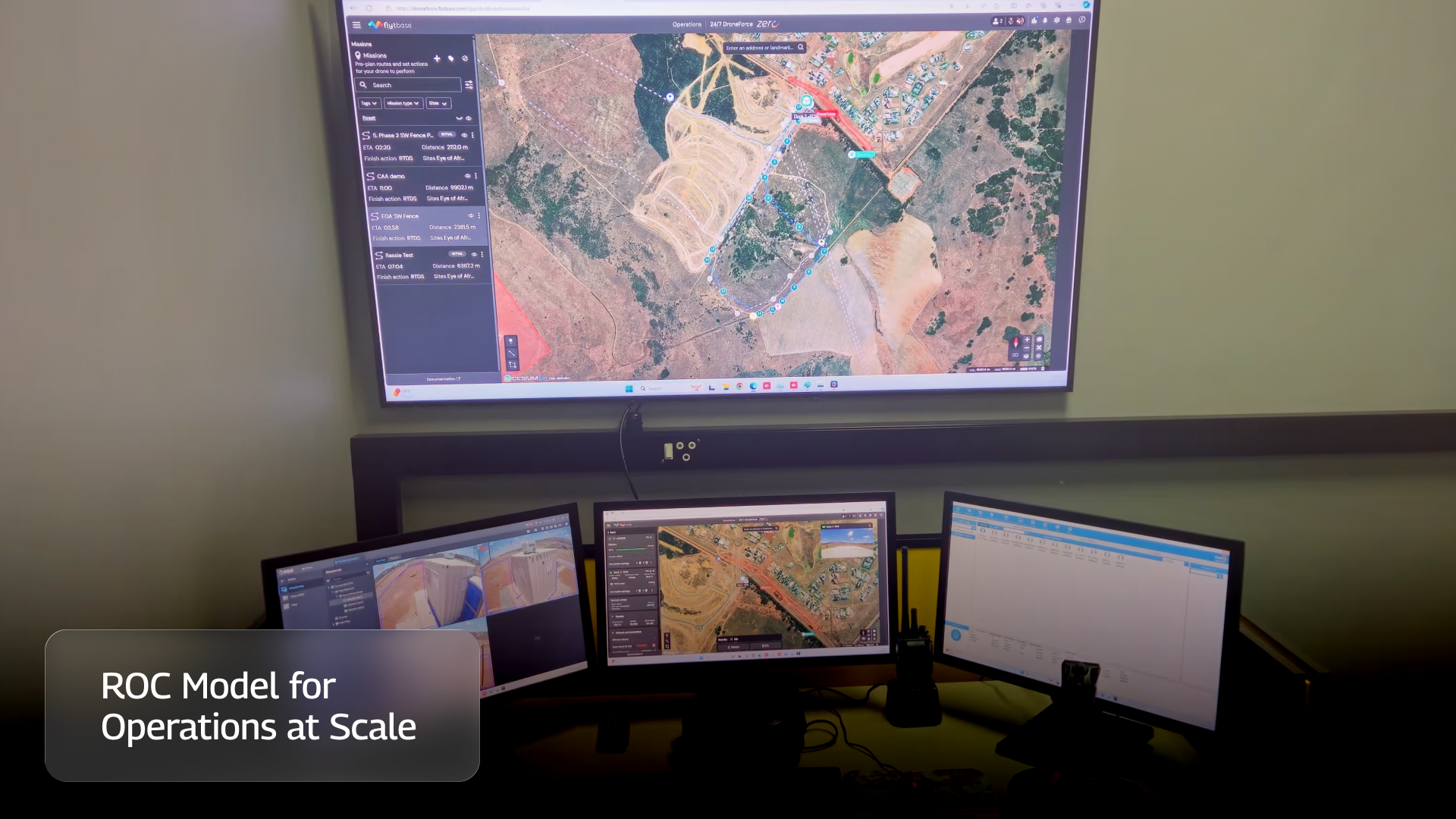
Each drone operates from a fixed on-site dock, following pre-defined patrol routes and streaming live video to a central dashboard. What once required a vehicle and two guards now happens automatically, on schedule, and entirely electric. That shift replaces combustion with computation, and it’s measurable.
Making sustainability measurable
Every autonomous mission on the FlytBase platform creates a digital record — time, distance, energy consumption, and route data, all stored automatically. That telemetry enables sustainability and operations teams to compare their “before” and “after” footprint with verifiable evidence.
Just operational data that doubles as ESG evidence, ready for internal tracking or external reporting.
A design-led path to decarbonization
Sustainability leaders are increasingly recognizing that the fastest route to measurable carbon reduction isn’t always through offsets or major infrastructure shifts. Sometimes it starts with rethinking how routine operations are performed; removing fuel dependency from daily patrols, inspections, and site monitoring.
By integrating autonomous drone operations, organizations not only streamline coverage and response times but also decarbonize repetitive tasks in a way that’s traceable and reportable.
The bigger picture
Manual patrols will always be necessary in some contexts, but their full-scale use is quickly becoming outdated. With autonomy, enterprises can replace recurring fuel-based routines with electric, data-driven workflows, gaining safety, visibility, and sustainability in one move.
That’s the quiet transformation: not a new sustainability program, but a cleaner way to maintain operations.
Closing the loop
The carbon footprint of manual patrols has stayed invisible because no one was measuring it. Now, with FlytBase’s autonomous systems, every saved kilometer and every avoided liter of fuel can be tracked and reported, creating operational proof of carbon reduction.
Explore how leading enterprises are designing sustainability into their operations with autonomy in the FlytBase Case Study Library.
FAQs
Find quick answers to common questions about compatibility, setup, features, and pricing
Because they rely on fossil-fueled vehicles running repeated low-speed routes, often multiple times a day. Across industrial and logistics sites, these trips add up to tens of tons of CO₂ emissions annually — emissions that usually go untracked in ESG reports.
Docked drones managed through FlytBase replace vehicle-based patrols with electric, pre-scheduled flights. Each mission consumes a fraction of the energy and creates digital records of distance, duration, and power — making emission reduction measurable and auditable.
Yes. Every FlytBase mission generates verifiable telemetry, including timestamps, power use, and route data. This information integrates directly into ESG audits or Scope 1 emission reports, replacing estimates with real figures.
Begin with a baseline audit — total fuel use, patrol frequency, and average distance. Once automated drones are deployed, FlytBase dashboards display power consumption and flight logs, helping teams calculate precise CO₂ savings per site.
.webp)
.svg)
.webp)

.png)
