




Get Your Free Drone Autonomy Guide Today!
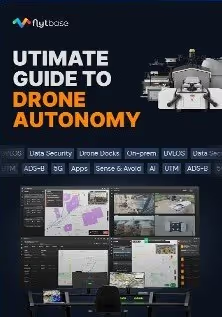

Think of drones as infrastructure, not tools. This shift in perspective is reshaping how enterprises approach autonomous operations, moving from occasional aerial data collection to permanent, integrated systems that operate around the clock.
Achal Negi, Director of Business Development at FlytBase, explored this concept during his Commercial UAV Expo presentation on how Drone-in-a-Box systems are becoming the foundation for what he calls "physical AI"—autonomous systems that bridge the digital and physical worlds.
From Service Model to Infrastructure Deployment
Achal opened by contrasting two fundamentally different approaches to enterprise drone deployment. The traditional model treats drones as tools: pilots travel to sites, manually fly missions, collect data, and return to create reports. This approach, while useful, creates scaling challenges when organizations need to manage operations across dozens or hundreds of locations.
The emerging model positions drones as infrastructure. Drone-in-a-Box systems are permanently deployed at enterprise sites, housed in weather-proof docking stations that handle landing, charging, and data transfer autonomously. These systems integrate directly with existing enterprise software, from security platforms to ERP systems, enabling 24/7 autonomous operations without human presence on-site.
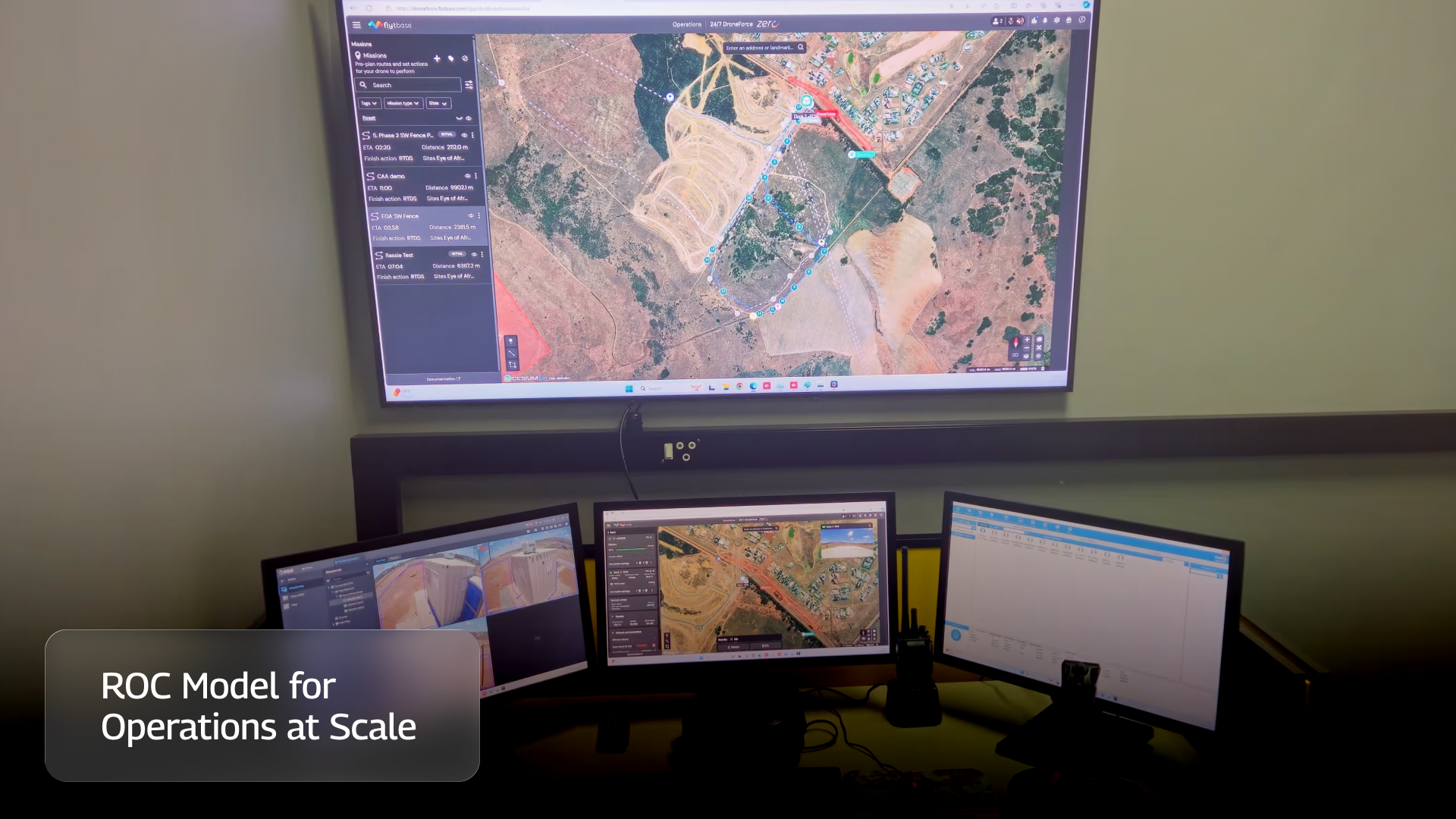
This shift delivers measurable operational benefits: constant monitoring capability, reduced operational costs through eliminated travel and on-site personnel, scalable deployments managed from central hubs, and enhanced safety by removing people from hazardous environments.
Real-World Implementation Across Industries
Achal's presentation centered on detailed case studies demonstrating how different industries achieve specific efficiencies through permanent drone infrastructure.
Utilities: Proactive Monitoring in Norway
Statnett, managing 11,000 kilometers of power lines and 150 substations across challenging terrain, implemented Drone-in-a-Box systems following a sabotage incident that caused a 60,000-liter oil spill. The autonomous systems conduct scheduled inspections and integrate with security systems to automatically dispatch drones when motion sensors detect unauthorized activity, even at 2:00 AM. The infrastructure delivers continuous monitoring in environments too dangerous for regular human patrols while feeding data directly into existing GIS systems, including ArcGIS and Esri platforms.
Mining: Automated Safety at Anglo American
At Anglo American's Quellaveco mine in Peru, Drone-in-a-Box systems address two critical safety applications across a 14-kilometer site perimeter. Before scheduled blasts, drones automatically survey danger zones using AI to detect remaining personnel or vehicles. When detected, loudspeaker systems broadcast evacuation warnings.
The system also integrates with Caterpillar's MineStar platform to automatically inspect returning haul trucks, streamlining maintenance workflows. The company plans to deploy seven total docking stations in the first year, eliminating time-consuming transport between survey locations and redirecting personnel toward analytical activities.
Rail: Operational Efficiency with CSX
CSX embedded Drone-in-a-Box systems into their Yard Management System across multiple sites covering 20,000+ route miles. When tracks register as empty, the system automatically launches drones to capture high-resolution imagery, detecting defects as small as 1/8 inch using RTK precision cameras and AI processing.
This implementation represents the first U.S. deployment with a "one-to-many" waiver, allowing single operators to manage multiple autonomous systems simultaneously while maintaining continuous inspection without disrupting rail traffic.
Agriculture: Protecting Pineapple Plantations in the Philippines
Dole Asia deployed autonomous drones across 24,000 hectares of pineapple plantations to address theft and organized crime. The system integrates with their Zoho ERP platform, automatically generating reports and logging operational data into central business management systems.
The implementation achieved a 35% reduction in unauthorized access incidents while providing reliable operations regardless of weather or remote terrain conditions.
Public Safety: Emergency Response in Asheville, USA
Following hurricane damage, Asheville, North Carolina deployed 13 autonomous docking stations integrated with 911 and Computer-Aided Dispatch systems. When emergency calls are received, drones launch automatically to provide situational awareness before first responders arrive.
The system delivers 90% faster response times for assessing damage and supporting emergency decisions while improving resource allocation through real-time aerial intelligence.
The Service Model Evolution
Achal highlighted how the technology shift is enabling new business models. Companies like Titan Protection have evolved from traditional security providers to "Docked Drone as a Service" operations, managing drone fleets for clients from remote command centers.
This service approach packages autonomy, compliance, and operations into turnkey offerings, allowing enterprises to access drone infrastructure without developing internal capabilities.
Their model eliminates upfront capital expenses while delivering 60% lower security costs and 40% fewer incidents through rapid aerial response. The service extends surveillance coverage to previously blind outdoor zones while requiring no customer investment in hardware or operations expertise.
Implementation Insights
The presentation emphasized that successful deployments require integration rather than standalone systems. Simply flying drones remotely doesn't deliver transformative value—the real benefits emerge when drone systems connect tightly with existing enterprise software and operational workflows.
Achal noted that enterprises don't buy drone products; they adopt solutions that scale across sites and integrate with existing systems. This distinction explains why some implementations deliver significant operational improvements while others remain limited pilot programs.
Looking Forward
As drone technology enters what Achal characterized as its infrastructure phase, adoption patterns are shifting from experimental pilot programs to systematic deployments across enterprise operations. The case studies suggest that organizations are moving beyond asking whether drones should be deployed to determining optimal placement strategies for docking stations.
For an industry that has spent years discussing autonomous potential, Achal's presentation offered something more valuable: proof that the infrastructure future is already being built, one docking station at a time.
FAQs
Find quick answers to common questions about compatibility, setup, features, and pricing
.webp)
.svg)
.webp)

.png)
