
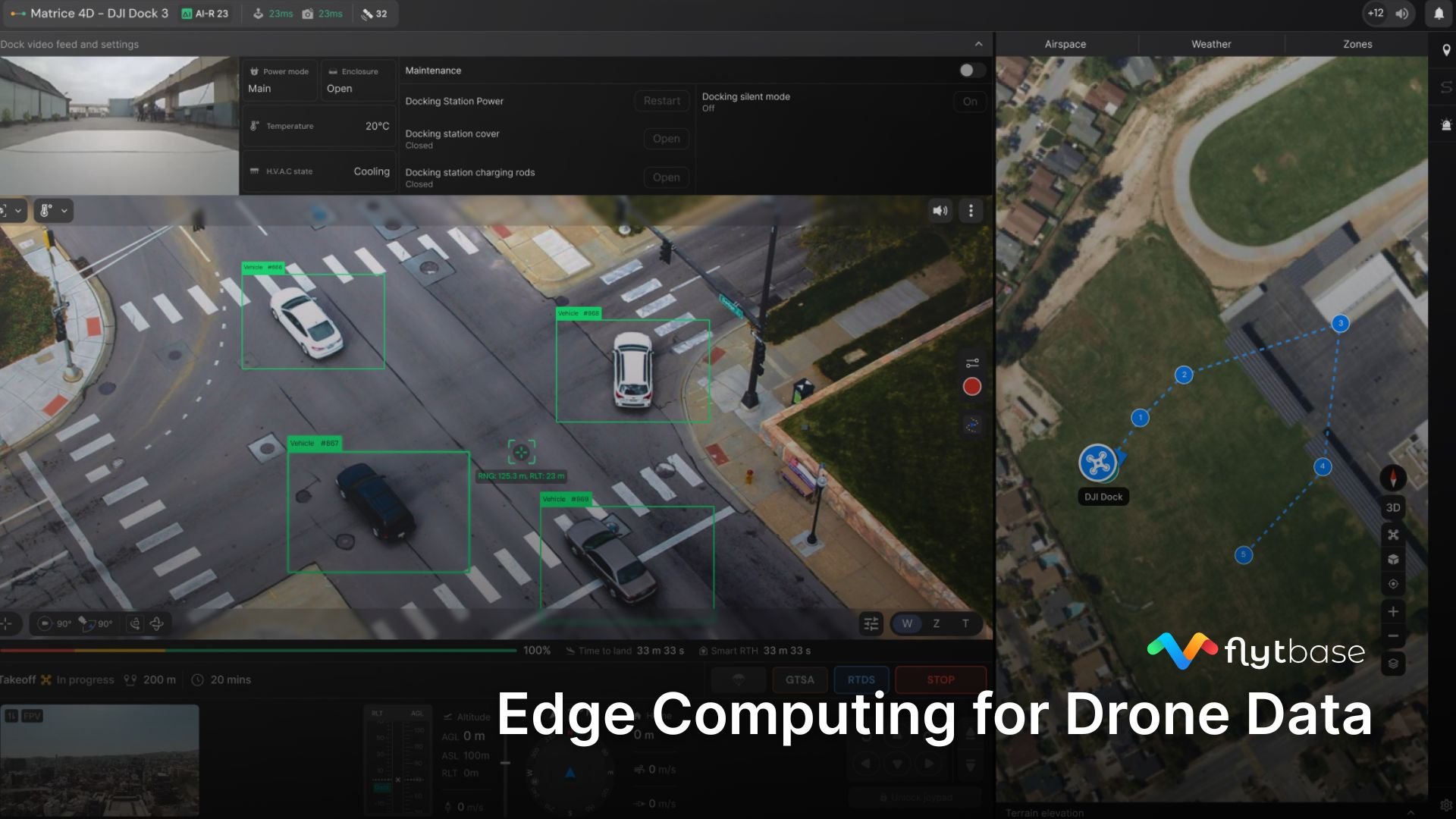
As autonomous drone operations mature, data has become both the biggest asset and the biggest challenge. High-resolution video, thermal imaging, and sensor data generate terabytes of information every week, and transferring all of it to the cloud for processing simply isn't sustainable.
That's where edge computing comes in. By processing data directly at or near the point of collection, edge systems enable faster decisions, lower bandwidth costs, and reliable performance; even in remote or bandwidth-constrained environments.
Why Edge Computing Matters in Autonomous Operations
Traditional drone deployments rely on centralized cloud servers to analyze and store data. While this approach works for small programs, it quickly becomes a bottleneck at scale.
The core benefits of edge computing include:
- Speed: Real-time processing for threat detection, safety alerts, and mission adjustments
- Resilience: Continuous operation in areas with unreliable connectivity
- Efficiency: Lower transmission costs by processing only relevant data
- Security: Localized control of sensitive or classified information
By processing drone data closer to its source, organizations transform drones from passive sensors into intelligent, autonomous systems capable of instant response.
Real-Time Decision Making at the Edge
The true advantage of edge processing lies in immediacy. When drones analyze sensor inputs locally, they can make split-second decisions that enhance safety and efficiency.
Examples of real-time edge processing include:
- Detecting infrastructure defects or leaks during inspection flights
- Identifying safety hazards or intrusions at industrial sites
- Adjusting flight routes based on weather or obstacle data
- Triggering automated alerts to maintenance or security teams
This capability reduces dependence on network connectivity and enables operations in locations where cloud access isn't feasible.
Reducing Latency and Network Dependency
Edge computing eliminates the delay caused by transmitting data to distant servers for processing.
Latency reduction delivers tangible operational improvements:
- Immediate situational awareness during security or emergency operations
- Faster maintenance decisions through on-site analytics
- Reliable performance in remote, offshore, or underground environments
- Greater control over bandwidth consumption and data prioritization
For mission-critical environments like energy facilities, mines, or emergency response zones, every second counts — and edge computing ensures those seconds aren't lost to data transfer delays.
Cost and Bandwidth Optimization
Bandwidth costs grow rapidly as drone programs scale. Streaming high-definition video or LiDAR data to the cloud requires substantial network capacity.
Edge processing reduces this dependency by filtering and summarizing data locally before sending it onward. Only the most relevant results — such as detected anomalies or event triggers — need to be transmitted, lowering cloud processing and storage expenses.
Over time, this approach improves both total cost of ownership (TCO) and operational predictability.
Edge Computing Architecture for Drone Programs
A modern drone-edge ecosystem typically includes three key layers:
1. Onboard Processing: AI models running directly on the drone for immediate classification or navigation adjustments.
2. Dock-Level Edge Nodes: Local compute units handling fleet coordination, storage, and real-time mission analytics.
3. Site-Level Edge Servers: Intermediate hubs aggregating data from multiple drones or docking stations before forwarding to the cloud.
Each layer strengthens autonomy and reduces the need for continuous human or cloud involvement.
Security and Compliance Advantages
For organizations operating in regulated industries, edge computing also enhances data governance.
Key compliance benefits include:
- Data sovereignty through localized processing and storage
- Air-gapped or private-network configurations for sensitive missions
- Greater control over data access and retention policies
- Simplified compliance with industry frameworks and audit requirements
Processing data on-site minimizes exposure risk and ensures regulatory adherence without sacrificing performance.
Real-World Results
Enterprises across energy, infrastructure, and public safety sectors are already seeing measurable value from edge integration:
- 80% reduction in data transmission costs
- Up to 90% faster response times for automated alerts
- Near-zero operational downtime in low-connectivity zones
- 3x improvement in system reliability across distributed sites
In mining and emergency response environments, edge processing has proven essential for continuous operations — where every second and every decision matter.
Future Outlook: Edge + Cloud Collaboration
Edge computing doesn't replace the cloud — it complements it. While edge systems process immediate decisions locally, cloud environments remain vital for training AI models, storing historical data, and coordinating multi-site operations.
The most efficient organizations adopt a hybrid data strategy:
- The edge manages live decision-making and short-term storage.
- The cloud handles long-term analytics, compliance, and performance optimization.
Platforms like FlytBase enable this balance by orchestrating how and where data is processed, ensuring continuity even when network conditions vary.
Take the Next Step Toward Intelligent Autonomy
Empower your drone operations with real-time intelligence and operational independence. Adopt an edge-enabled architecture that keeps your data fast, secure, and actionable — wherever your missions take place.
Learn More About Edge Integration | Talk to a Deployment Specialist