
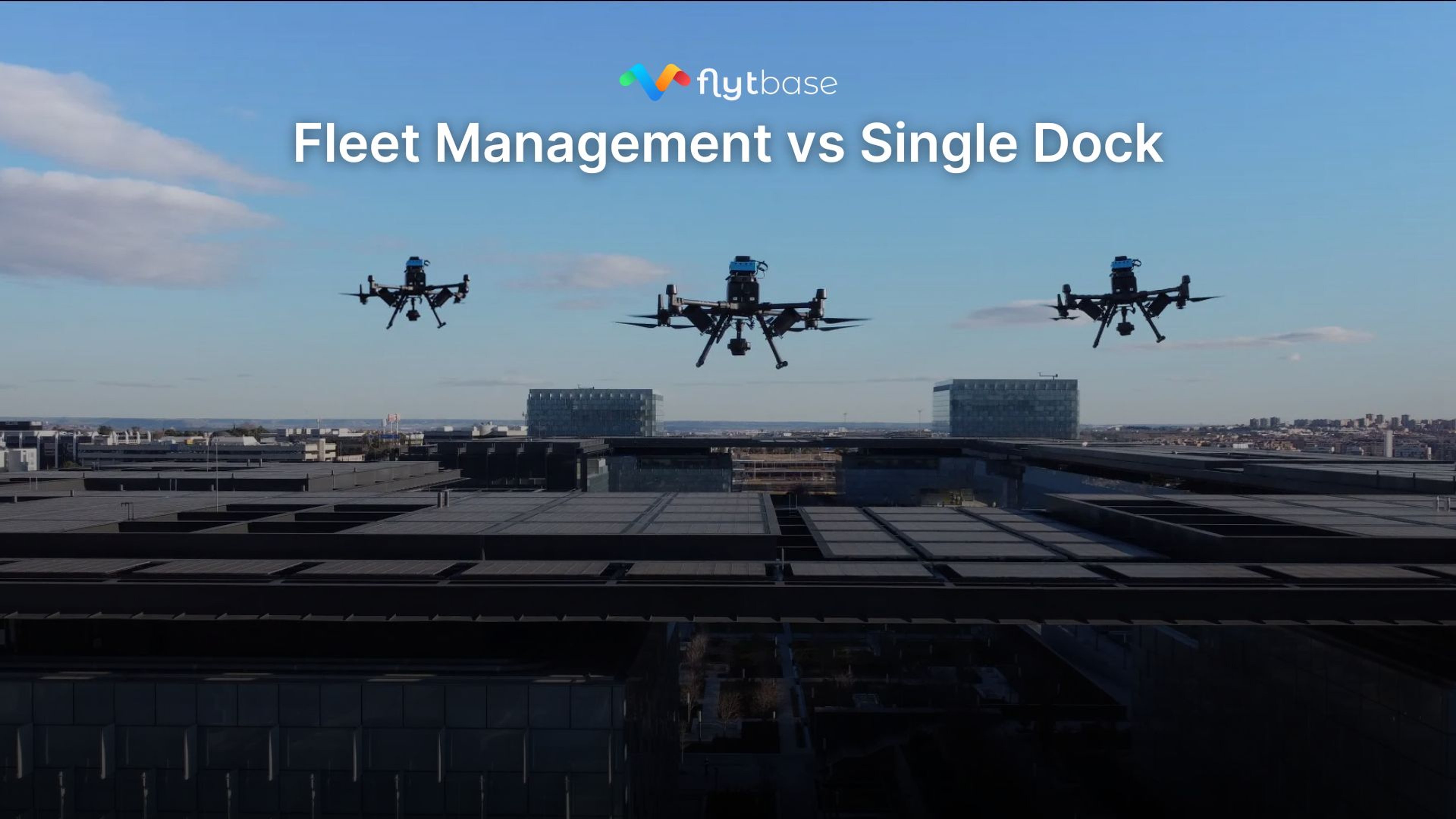
The deployment model an organization chooses for its autonomous drone program determines scalability, efficiency, and long-term return on investment. While many begin with a single dock setup for specific use cases, operational maturity often demands centralized fleet management.
Understanding the strengths and limitations of each approach helps enterprises plan technology investments that align with growth objectives, compliance requirements, and total cost of ownership.
Understanding the Two Deployment Models
Single Dock Deployment: A single dock deployment consists of one autonomous drone and docking system assigned to a specific location or use case. It operates independently with limited or no centralized coordination.
Typical characteristics include:
- Dedicated configuration for a specific mission type or site
- Localized data processing and storage
- Minimal integration with enterprise systems
- Independent maintenance and operational scheduling
This model works best for proof-of-concept programs or high-criticality sites that require constant, localized monitoring.
Fleet Management: Fleet management involves multiple drones and docks coordinated through a unified orchestration platform. It enables centralized oversight, automated scheduling, and standardized data handling across multiple locations.
Key capabilities include:
- Centralized mission planning and monitoring
- Shared data infrastructure with cloud or hybrid processing
- Standardized maintenance and operational procedures
- Enterprise-level integration with existing systems
Fleet management creates consistency, scalability, and operational intelligence across an entire organization rather than a single site.
When Single Dock Deployment Makes Sense
Single dock deployments are ideal when organizations are evaluating new technologies or when specific missions require isolated performance.
Scenarios where this model performs best:
- Remote sites with limited network connectivity
- High-security or regulated environments requiring data isolation
- Specialized missions that do not scale across other operations
- Proof-of-concept trials validating technology or workflow integration
Single dock systems offer simplicity and lower initial costs, but they limit growth once additional sites or missions are added.
Advantages of Fleet Management
Fleet management becomes essential when operations expand beyond pilot scale. By centralizing control, organizations can standardize performance, share resources, and manage multiple missions simultaneously.
Operational advantages include:
- Centralized command center for multi-site operations
- Coordinated scheduling and mission optimization
- Fleet-wide analytics for performance tracking
- Reduced downtime through automated maintenance cycles
Strategic benefits include:
- Scalable architecture for enterprise growth
- Cross-site data correlation for trend analysis
- Streamlined compliance and documentation
- Consistent operational standards across all sites
Fleet management maximizes return on investment by converting isolated drone assets into a unified operational ecosystem.
Cost and Scalability Comparison
Single dock deployments typically have lower upfront costs but higher long-term expenses when scaled. Fleet management involves greater initial setup but achieves cost efficiency through shared infrastructure and standardized operations.
Single Dock Cost Structure:
- Individual hardware and licensing per site
- Separate maintenance and operational teams
- Limited data-sharing and redundant infrastructure
- Higher per-site support and training costs
Fleet Management Cost Structure:
- Centralized licensing and infrastructure
- Shared technical and operational resources
- Bulk procurement and standardized configuration
- Lower long-term cost per site as scale increases
Organizations generally find that fleet management becomes more cost-effective beyond three to five active sites.
Integration and Workflow Alignment
Fleet management aligns more effectively with enterprise IT and operational frameworks. It enables seamless integration with maintenance, analytics, and compliance systems.
Fleet Management Integration Benefits:
- Unified API architecture for enterprise connectivity
- Centralized data management with role-based access
- Real-time synchronization between field operations and control centers
- Automated documentation for compliance and reporting
Single Dock Integration Limitations:
- Manual data consolidation across independent sites
- Inconsistent data formats and reporting standards
- Limited visibility for centralized decision-making
FlytBase orchestration software provides consistent APIs for both deployment models, allowing organizations to begin with single dock setups and upgrade to full fleet management without reconfiguration.
Transitioning from Single Dock to Fleet Management
Scaling from a pilot project to enterprise operations requires planning and infrastructure readiness.
Recommended transition steps:
- Evaluate operational data from single dock pilots to identify performance metrics and integration needs.
- Standardize hardware and communication protocols to support interoperability.
- Implement centralized mission management and analytics systems.
- Train operational teams for multi-site coordination and performance monitoring.
- Expand data governance and cybersecurity frameworks for enterprise deployment.
FlytBase enables this transition through a modular architecture that supports both localized autonomy and centralized orchestration under a single platform.
Real-World Example
A leading logistics enterprise began with isolated drone-in-a-box systems for warehouse perimeter monitoring. As the number of facilities grew, manual management became inefficient.
By adopting FlytBase fleet orchestration, the company unified more than 20 docks under centralized control. This shift improved operational uptime by 60 percent, reduced maintenance costs by 40 percent, and standardized compliance documentation across all locations.
Building a Scalable Operational Framework
Fleet management provides the structure needed for enterprise-wide autonomous operations. It ensures reliability, standardization, and cost optimization as organizations expand.
A well-defined framework includes:
- Scalable infrastructure for mission scheduling and control
- Data synchronization across all operational sites
- Continuous performance tracking and predictive maintenance
- Integration with enterprise analytics and compliance systems
By aligning deployment strategy with business growth objectives, organizations create a sustainable foundation for long-term autonomous operations.
Take the Next Step Toward Scalable Drone Operations
Whether you are evaluating a single dock deployment or preparing to manage an enterprise-scale fleet, FlytBase provides the orchestration platform to grow with your mission requirements.
Explore how centralized control, automation, and analytics can transform your drone program into an intelligent, scalable operation. Schedule a consultation with FlytBase to know more about what's the best for your deployment.