


Get Your Free Drone Autonomy Guide Today!

Agriculture has always depended on seasonal labor, people walking fields, inspecting crops, and monitoring equipment under the sun. But as global workforce shortages intensify, farms and agribusinesses are turning to autonomy to keep productivity intact.
In 2025, labor scarcity is not just an operational issue; it’s reshaping how farms think about technology. Across Asia and Latin America, growers are embracing automation to reduce dependency on field labor while maintaining consistency, safety, and scale.
How agriculture enterprises tackled a workforce crunch
Agricultural operations once relied on daily manual inspections for plantation monitoring and facility checks. Staff shortages made it difficult to maintain inspection frequency, leading to delays in detecting irrigation issues, plant stress, and logistics inefficiencies.
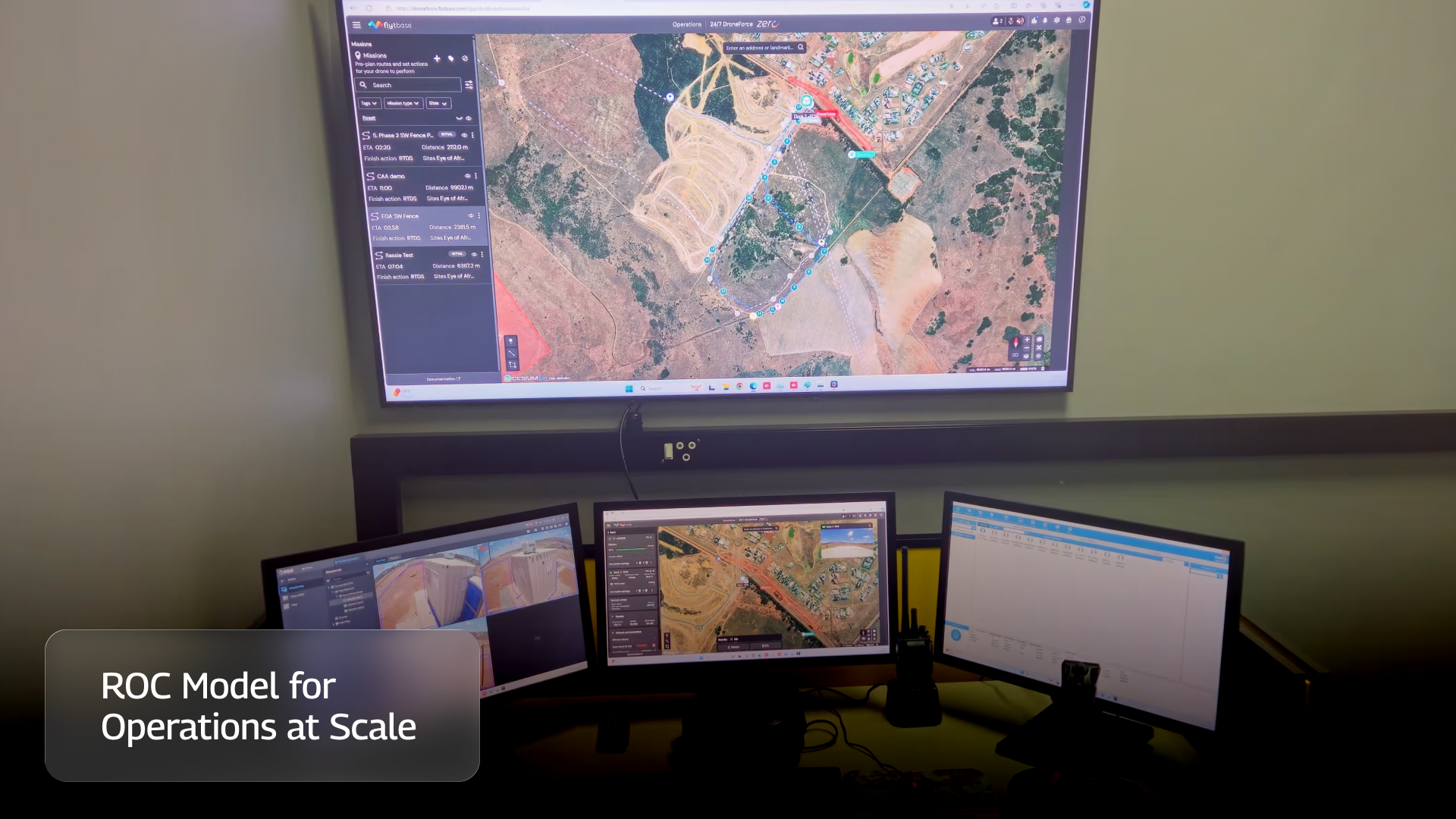
Instead of increasing labor costs, enterprises turned to docked drones powered by the FlytBase autonomy platform. Each drone now launches on pre-programmed schedules, flying over designated zones to capture thermal, multispectral, and visual imagery. These flights happen automatically — without pilots, coordination calls, or daily setup.
Captured data is instantly processed within the internal systems, giving agronomists access to plant health indices, moisture readings, and warehouse visibility from one centralized dashboard.
What automation changed
The results were immediate and measurable:
- 50% fewer field hours spent on manual inspections
- 75% improvement in data accuracy and consistency
- Faster response to early signs of crop stress and irrigation anomalies
By automating repetitive field tasks, the team shifted focus from observation to action — using data-driven insights to make faster, more informed decisions on fertilization, irrigation, and logistics.
A new kind of farm workforce
Automation didn’t replace agricultural workers — it redefined their roles. FlytBase’s autonomous operations allowed them to move from labor-intensive scouting to data management and insight-driven planning. Supervisors now oversee drone data outputs, analyze patterns, and manage crop strategies remotely, cutting down travel and field exposure.
This change not only improved efficiency but also made agricultural jobs safer and more technical, attracting a new generation of digitally skilled workers.
Why autonomy fits agriculture perfectly
Farming operates in cycles that repeat predictably — making it ideal for automation. Docked drones integrated with FlytBase enable:
- Scheduled monitoring that aligns with crop growth stages
- Precision data collection over wide, hard-to-reach areas
- On-prem processing to protect sensitive yield and supply data
- Consistent insights regardless of staffing fluctuations
For enterprises, this means reliability that human-based operations can’t sustain year-round — especially across large, geographically dispersed sites.
From workforce gaps to smarter farms
Agriculture doesn’t need more labor to grow — it needs smarter systems. By adopting autonomous, docked drone operations, organizations are transforming how farms operate, proving that technology can bridge both workforce and sustainability challenges.
To learn how FlytBase powers large-scale agricultural automation, explore the Dole Case Study here.
FAQs
Find quick answers to common questions about compatibility, setup, features, and pricing
They deployed FlytBase-powered docked drones for daily plantation monitoring. These autonomous flights reduced manual field hours by 50% and improved data accuracy by 75%, enabling faster irrigation and crop health decisions.
Docked drones automate scheduled crop monitoring, capture multispectral imagery for plant health, and process data on-prem — ensuring faster insights and reduced dependency on manual labor.
No. It redefines roles. Workers shift from field scouting to managing data and making insight-driven decisions, improving safety and creating higher-skill digital roles on farms.
Because farming operates in predictable cycles, autonomous systems like FlytBase enable consistent monitoring, precision data collection, and scalability — regardless of staffing changes or weather conditions.
.webp)
.svg)
.webp)

.png)
