.avif)


Get Your Free Drone Autonomy Guide Today!

Picture this: At 2 AM, a perimeter sensor triggers at a remote oil facility in Latin America. Your SCADA system flags the exact breach location—but your nearest security team is 45 minutes away. That’s 45 minutes of uncertainty, with valuable infrastructure at risk.
With SCADA-integrated drones, a unit can be airborne within 3 minutes, streaming live video of the breach back to your operations center. Your team instantly knows whether it’s a genuine intrusion or a false alarm—before anyone even leaves the office.
Energy companies in Argentina, Brazil, and Mexico are already deploying this approach. By combining SCADA with autonomous drones, they’re closing critical gaps in security and incident response.
The Problem: Alerts Without Eyes
SCADA systems do a great job monitoring assets and triggering alarms, but they can’t provide visual confirmation. That leaves operators guessing—should they dispatch security, or hold back?
The costs of that uncertainty are significant. False alarm responses average $2,500 per incident. Traditional verification methods add 30–90 minutes to response time. Even active patrols only cover 2–3% of a perimeter each hour. And with 67% of incidents occurring overnight, limited staffing makes the challenge even worse.
The Solution: From Alarm to Drone in 3 Minutes
Modern integrations use secure APIs to convert SCADA alerts into automated drone missions. Here’s what happens: the SCADA system generates GPS and alarm data, FlytBase receives it instantly, and the nearest available drone is dispatched. Within minutes, the drone is airborne, streaming live video into the same Genetec, Milestone, or Avigilon platforms your team already uses. No new systems to learn—just faster, more informed decisions.
Real-World Impact: Centralized Operations at Scale
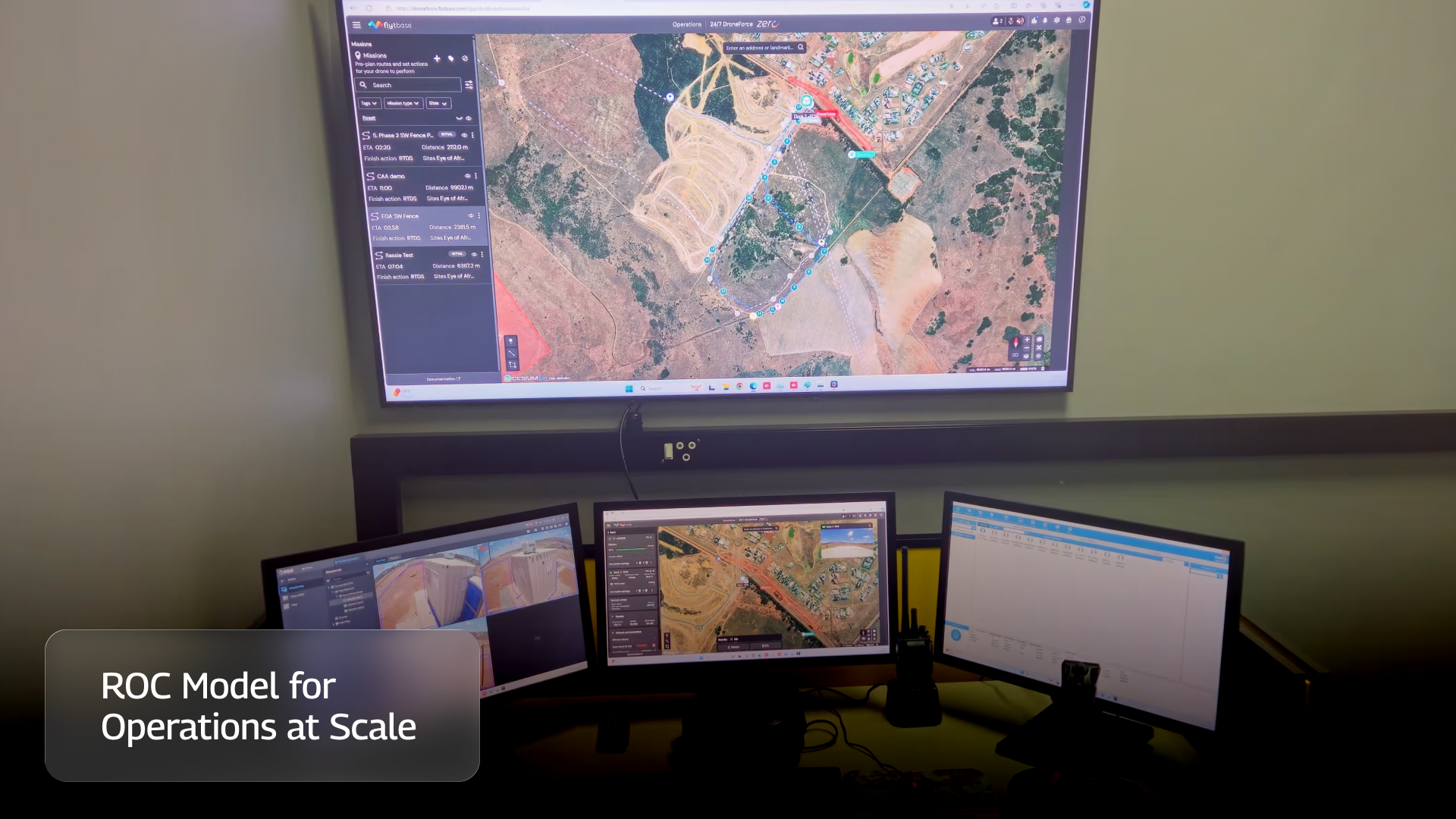
The benefits multiply when extended across multiple facilities. Instead of stationing guards at every remote site, companies can monitor dozens of locations from a single Remote Operations Center (ROC).
Pampa Energía in Argentina is one example. By integrating FlytBase with its SCADA system, the company reduced false dispatches and improved coverage of remote facilities without increasing staffing. A famous Oil and Gas Company in the US has reported similar benefits, cutting response times and creating video evidence for every incident.
Across deployments, results are consistent: average response costs fall from $2,500 to about $400 per incident, while incident awareness improves dramatically.
Beyond Security: The Business Case
This isn’t just about stopping intrusions. Automated visual verification reduces wasted dispatches, provides video documentation for compliance and insurance, and gives operations teams better visibility into remote conditions.
Early adopters track three key metrics:
- Time to visual confirmation — now under 5 minutes
- Percentage of alarms resolved remotely — often above 70%
- Cost per incident — cut by more than half
The result is better security and leaner operations.
Looking Ahead
SCADA integration is just the first step. Companies are already layering in:
- AI-powered anomaly detection with FlytBase AI-R
- Predictive maintenance based on alarm patterns
- Environmental monitoring for compliance reporting
With SCADA projected to reach $5.47B by 2030 and industrial drones growing at 11% annually, this convergence is shaping the future of energy security and operations.
Final Takeaway
For energy and oil & gas operators across Latin America and beyond, SCADA-drone integration is no longer experimental—it’s a proven path to faster response, lower costs, and stronger security.
Ready to explore? Schedule a demo with FlytBase and see how autonomous drones can transform your SCADA workflows.
FAQs
Find quick answers to common questions about compatibility, setup, features, and pricing
SCADA (Supervisory Control and Data Acquisition) systems monitor and control industrial processes. By integrating SCADA with autonomous drones, alarms can automatically trigger drone flights, providing live video for instant verification.
With FlytBase integration, drones can be airborne within 2–3 minutes of an alarm. This reduces incident verification time from the traditional 30–45 minutes down to under 5 minutes.
No. FlytBase integrates with leading platforms such as Genetec Security Center, Milestone XProtect, and Avigilon Control Center. Companies can leverage their current infrastructure while adding drone capabilities.
Yes. FlytBase supports BVLOS (Beyond Visual Line of Sight) operations with compliance frameworks and works closely with aviation regulators. Many deployments already operate under local authorizations.
.webp)
.svg)
.webp)
.png)
