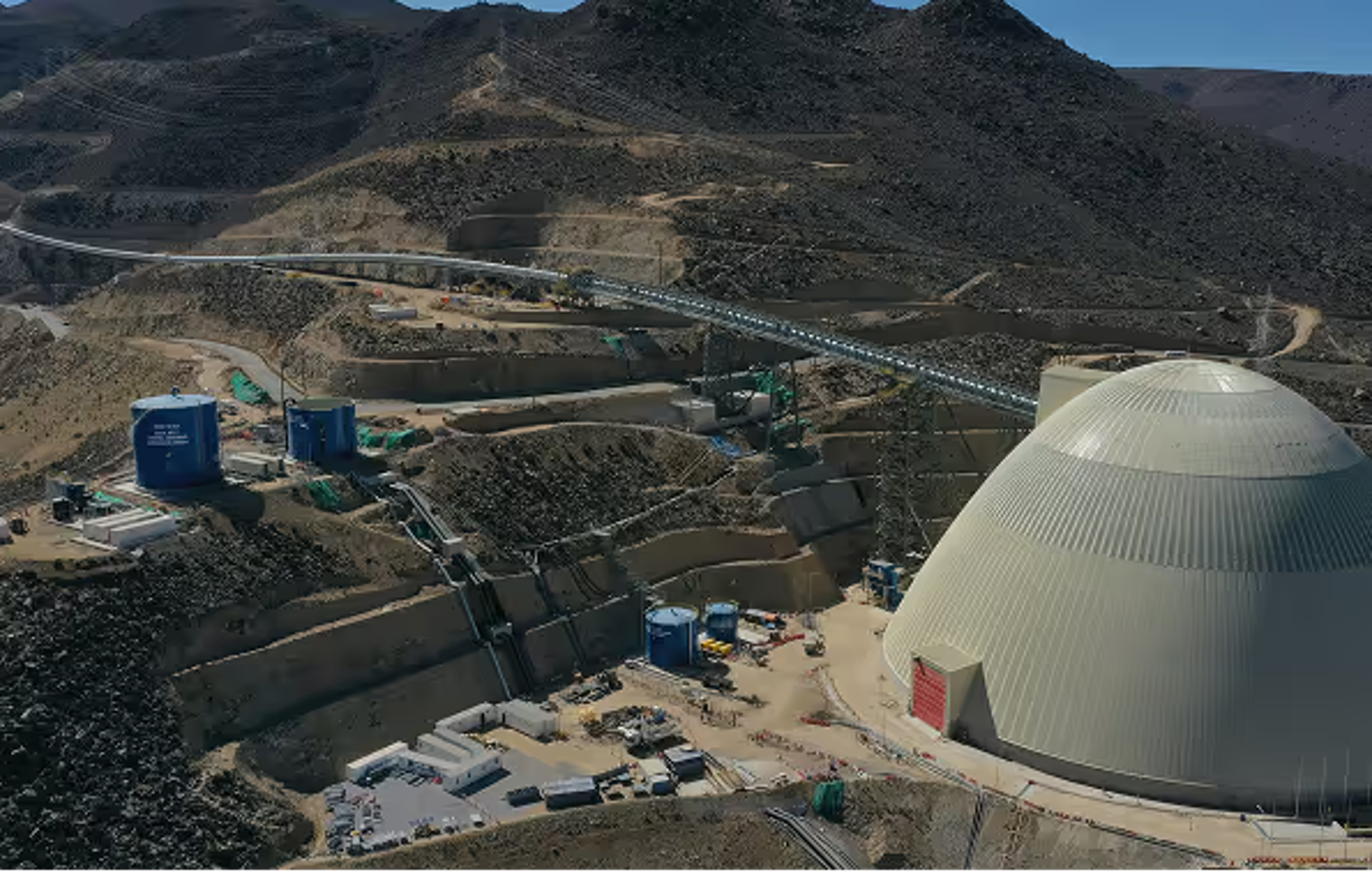
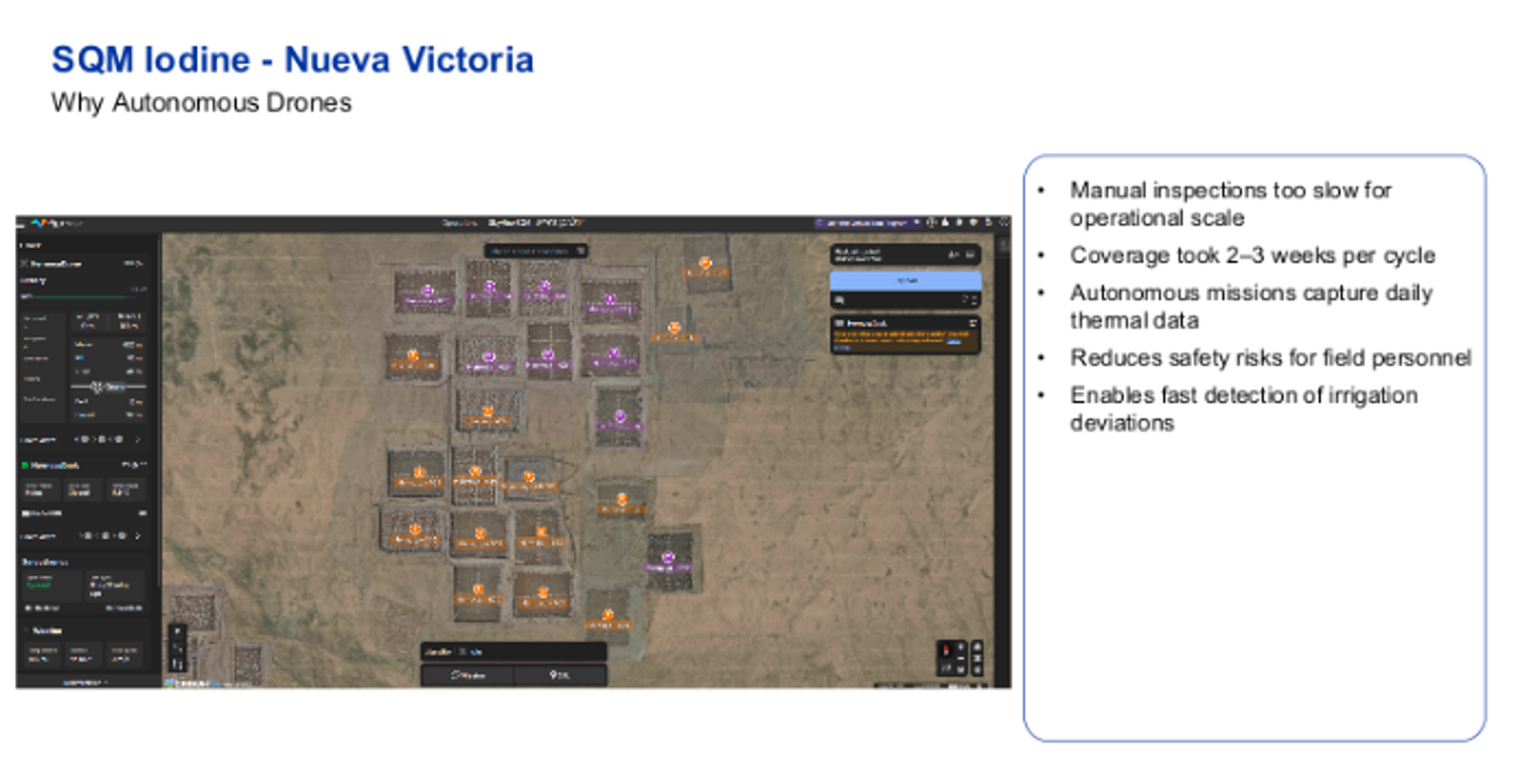
In the Atacama Desert, SQM runs one of the largest open-area mining operations on the planet. Every irrigation line, every sprinkler, and every degree of thermal variation can affect extraction performance. Yet until recently, those checks were manual, with field engineers walking or driving kilometers each day, scanning for leaks and disconnected sprinklers.
The innovation team wanted to move faster. They needed inspections that did not depend on human endurance or availability. They wanted data that could tell them, every morning, exactly where to act. That need led them to Adentu, a Chile-based integrator specializing in drone autonomy, and FlytBase, the enterprise autonomy platform built for unattended, data-driven drone operations. Together, they set out to answer a question that still challenges most industrial operations: how do you turn autonomy from a proof of concept into an everyday workflow
The challenge
For years, SQM’s inspection process was limited by scale. Walking inspections meant hours under the desert sun, while driving offered little precision and no thermal context. Problems often went unnoticed for days.
"Every hour our engineers spent walking was an hour not solving the problem," recalled Rodrigo Toler, Deputy Manager of Digital Innovation at SQM.
Three issues stood out immediately:
1. Inspection Gaps – The mine’s sheer size made it impossible to spot leaks or dry zones fast enough to prevent efficiency losses.
2. Delayed Feedback – By the time a disconnected sprinkler was found, parts of a pile might already have gone days without irrigation.
3. Resistance to Change – Field teams were experienced, pragmatic, and skeptical of new technology that promised efficiency but added complexity.
Solving these challenges required more than drones. It meant designing autonomy that could integrate smoothly into the rhythm of SQM’s daily operations.
The solution
Adentu’s engineers started small: one DJI Dock, one zone, one use case. The goal was not scale but trust. If they could prove consistent data quality and operational reliability, the system could grow naturally.
FlytBase became the mission brain, scheduling daily flights, managing telemetry, handling automatic image transfers, and maintaining health checks remotely. The drones captured RGB and thermal imagery, sending it to FlytBase, which then relayed it to SQM’s Azure environment for machine learning analysis.
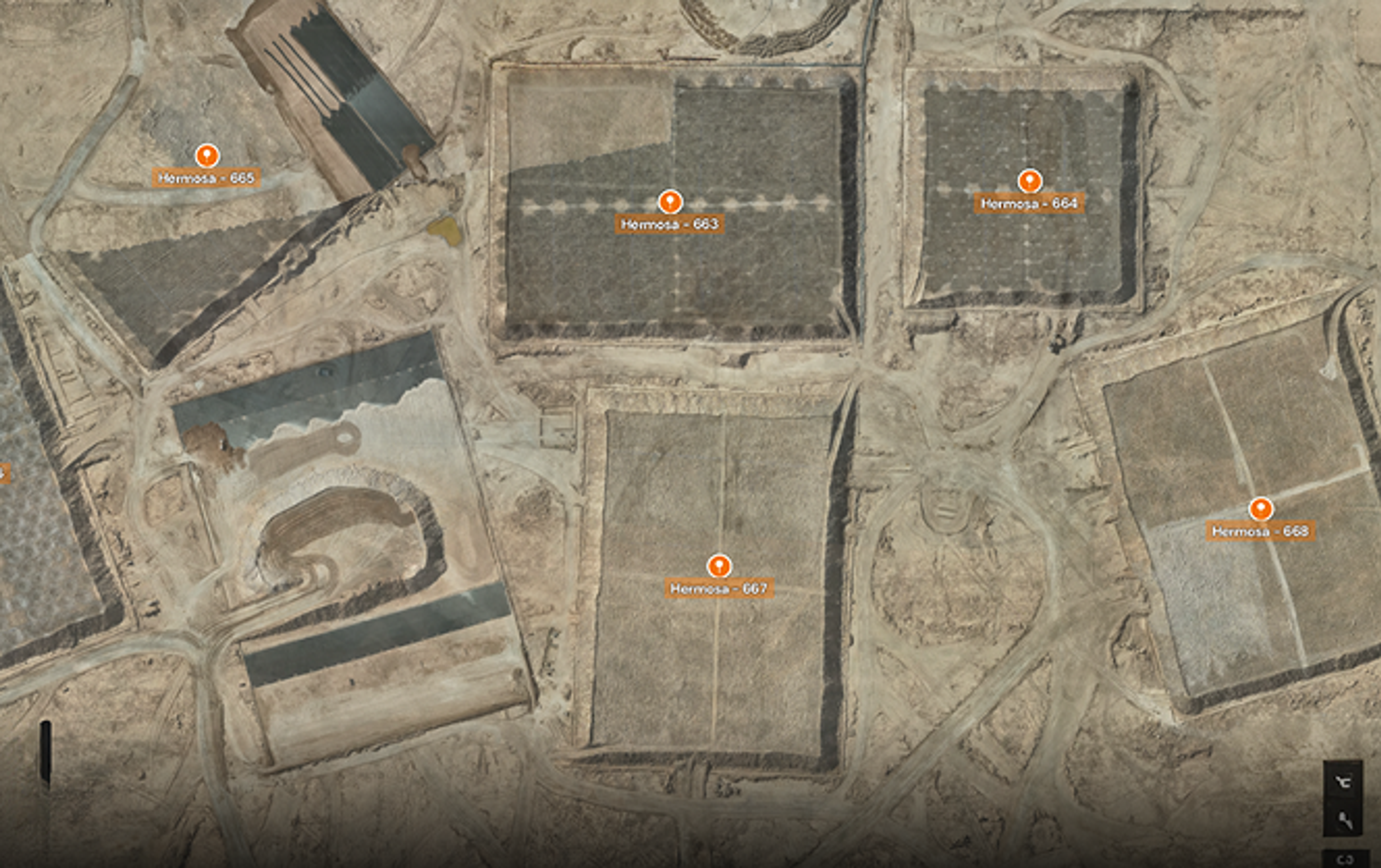
Adentu built middleware that allowed data to flow seamlessly between FlytBase and Azure. The output was not raw imagery but insight: irrigation maps and temperature patterns turned into ranked dashboards that showed field teams exactly where to go and what to fix first.
"The FlytBase platform let us automate daily missions, health checks, and data transfers, building a truly hands-free workflow," said José Pablo Mujica, Commercial Manager at Adentu.
It was the first time SQM’s inspection team could start their day with a ranked list of priorities generated entirely by autonomous systems.
How it works
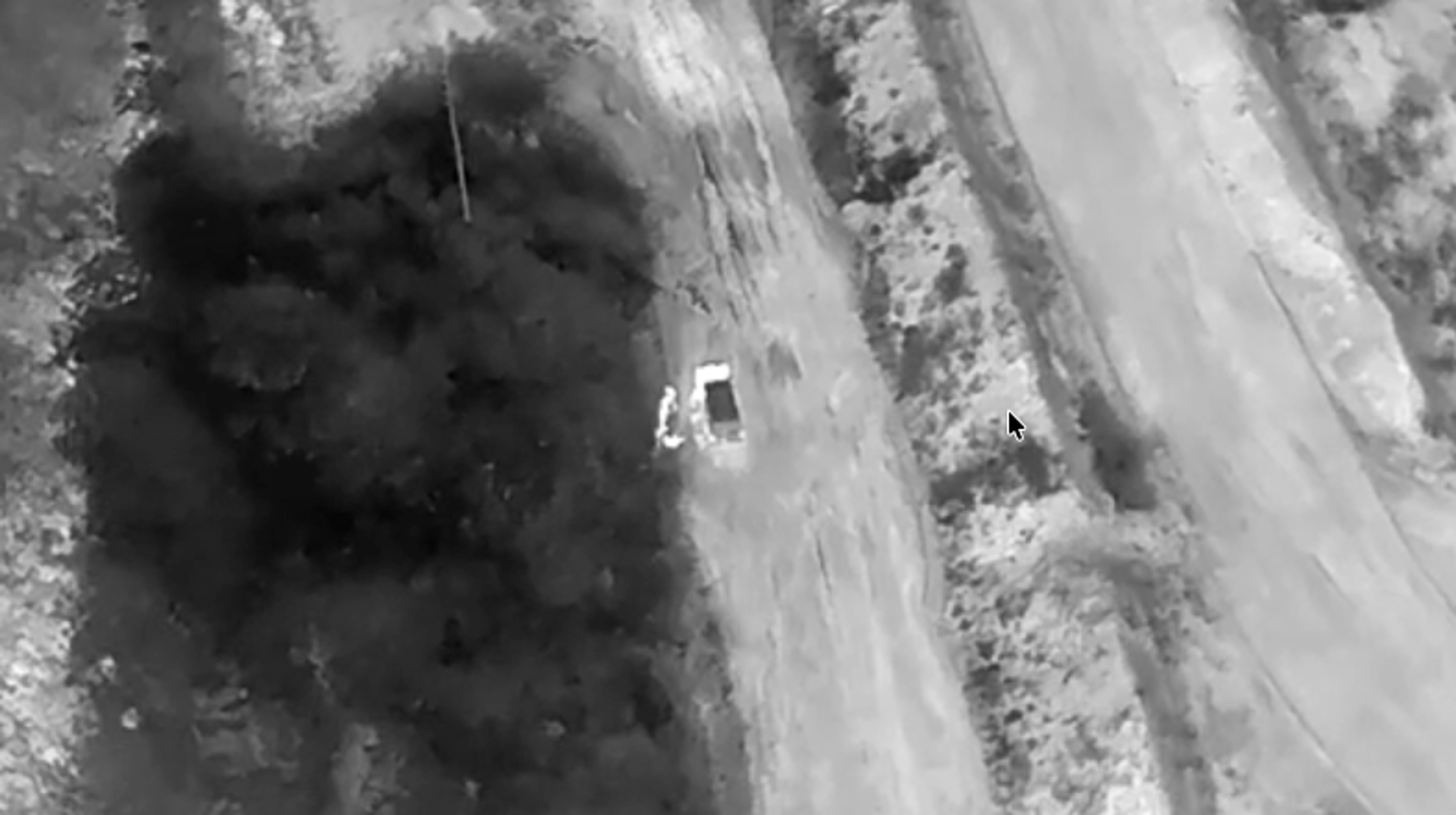
Each day begins before sunrise. FlytBase schedules two fully autonomous missions from the DJI Dock, one at dawn and another in the late afternoon when thermal contrast is strongest. The drone captures visual and thermal data across assigned leaching zones and automatically returns to recharge.
From there, FlytBase transfers the images via secure API to Azure’s Data Lake. Machine learning models, trained on SQM’s own imagery, classify the zones as optimal, wet, or dry. Within ninety minutes of flight completion, SQM’s operators have a refreshed dashboard on their screens with color-coded maps that highlight anomalies and pinpoint coordinates.
By 8:30 a.m., field teams already know where to go, what to inspect, and what to repair before most of the site has even started moving.
Implementation
The path from idea to production followed a clear playbook:
Step 1 – Ground Reality Check
Adentu and SQM mapped out the operational area, identifying optimal dock placement and accounting for heat, dust, and terrain. Connectivity was handled with Starlink, chosen for its stability in remote sites.
Step 2 – Integration and Validation
FlytBase’s APIs were configured to push data directly into Azure, while SQM’s engineers validated synchronization and data integrity after every flight.
Step 3 – AI Training with Human Feedback
The team labeled hundreds of early mission images, teaching the model how to differentiate between thermal reflections and actual irrigation issues. This human feedback loop improved accuracy by more than 30 percent within the first month.
Step 4 – Field Acceptance
The cultural milestone came when operators began asking for the drone data before heading out. "They refused to start work without the morning dashboard," Rodrigo recalled. That was the turning point when technology stopped being a project and became a habit.
Step 5 – Scale and Optimization
Once reliability stabilized above 95 percent, SQM standardized the workflow and treated the system like any other operational asset.
The results
In under ten months, SQM achieved measurable transformation.
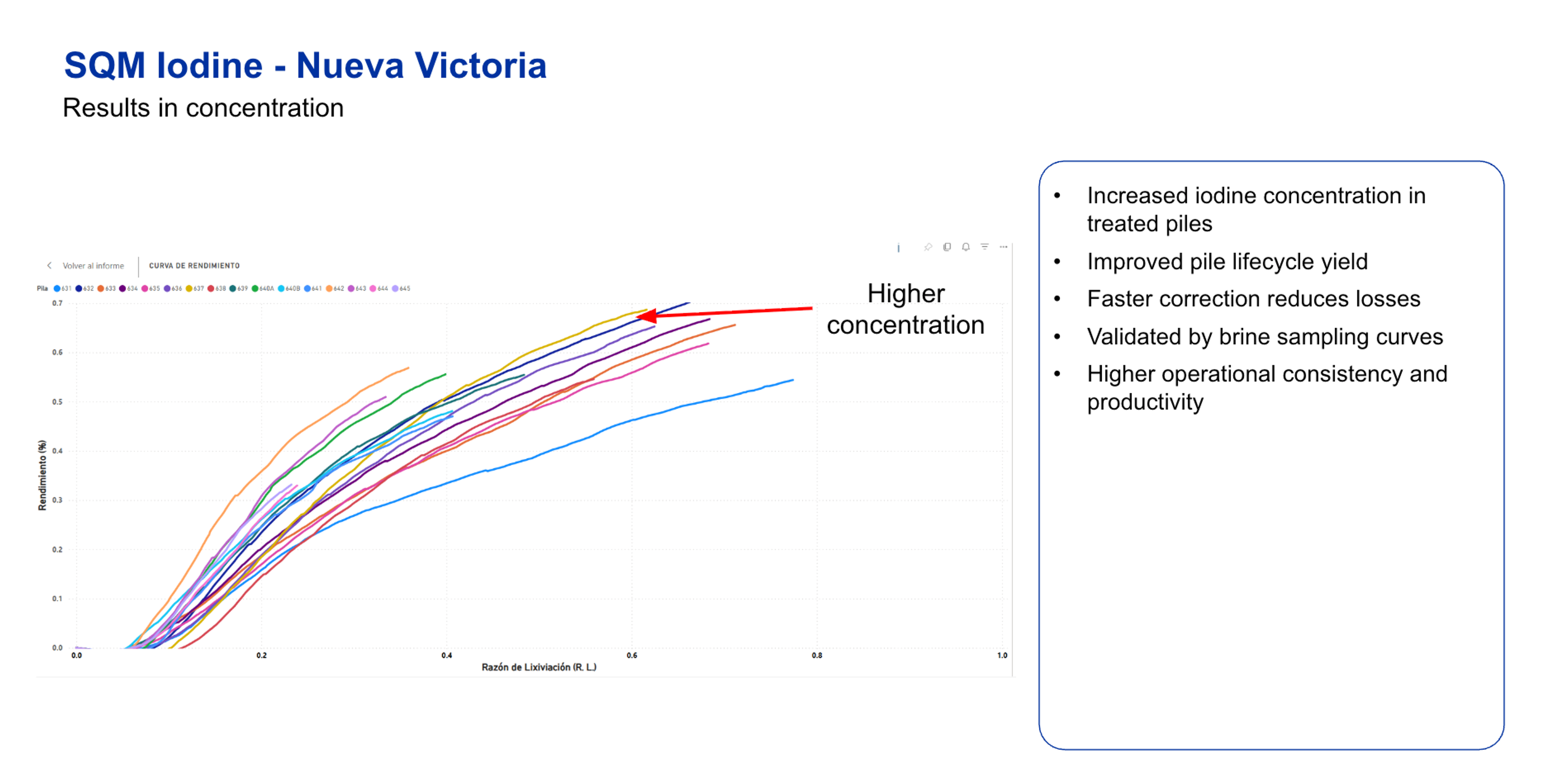
Inspection frequency doubled from biweekly to twice daily. Mission reliability exceeded 95 percent even under harsh desert conditions. Detection time fell from several days to under 90 minutes. Extraction efficiency improved by two percent. The total system investment was between USD 70,000 and 80,000, with ROI achieved in less than a year.
The operational impact went beyond metrics. Manual walking routes were reduced dramatically, freeing engineers to focus on solution design instead of detection. And with autonomy handling the repetitive work, field teams began seeing drones as collaborators, not competitors.
"From 0.5 percent to 2 percent gain in iodine extraction, that’s huge for a process this scale," said Rodrigo. "But the bigger shift was how our teams began trusting autonomy to deliver."
The way ahead
After proving success with irrigation inspections, SQM is now extending the model to other functions. The company has ordered additional DJI Docks for its security department, planning to run 24/7 site surveillance missions. Adentu is testing thermal pattern monitoring along HDPE lines to detect early signs of leakage or structural stress.
The next evolution will involve FlytBase AI-R, bringing edge AI analytics directly to the dock for real-time data processing even when connectivity drops. BVLOS (Beyond Visual Line of Sight) operations are also on the roadmap, enabling drones to cover larger zones autonomously.
"We’re now exploring how far edge AI can take us, processing insights locally, even offline," Rodrigo added.
What began as a single use case has now become a blueprint for how SQM plans to scale autonomy across its mining ecosystem.
Conclusion
SQM’s partnership with Adentu and FlytBase did not just automate a task, it redesigned an entire operational rhythm. In less than a year, they moved from walking inspections to running a self-monitoring mine that delivers insight every ninety minutes. FlytBase provided the autonomy backbone, Adentu made it field-ready, and SQM turned it into a strategic advantage.
"FlytBase handled the autonomy; Adentu made it work in the desert. Together we built a self-monitoring mine," said Rodrigo Toler, Deputy Manager of Digital Innovation, SQM.
This case stands as proof that autonomy does not replace people, it amplifies them. The future of mining is not just automated; it is intelligently connected, continuous, and measurable.
Frequently asked
How did SQM use FlytBase in this deployment?
FlytBase powered mission scheduling, telemetry management, and secure data transfer to Azure, allowing SQM to run fully autonomous thermal and visual inspections.
What role did Adentu play?
Adentu integrated FlytBase with SQM’s Azure environment, deployed the physical infrastructure, and customized workflows to fit operational needs.
What measurable ROI was achieved?
95 percent mission reliability, twofold inspection frequency increase, two percent gain in extraction yield, and a 10-month ROI cycle.
Can this solution scale to other operations?
Yes. The workflow is modular and hardware-agnostic, designed to extend to security, irrigation, and environmental monitoring use cases across global sites.