.avif)


Get Your Free Drone Autonomy Guide Today!


Mining operations never truly stop. But for teams working under FIFO (Fly-In, Fly-Out) schedules, continuity can still break; not in production, but in data.
Every new team arriving on-site needs an accurate, current picture of the pit before they can plan. And that’s where even the most efficient manual processes fall short.
The problem: continuity breaks every rotation
When one survey team flies out and another flies in, the handover is often defined by what’s missing: incomplete pit data, outdated surface models, or the pressure to squeeze in one last survey before boarding a plane.
Even with excellent surveyors, the challenge remains — data freshness depends on human timing, not operational need.
The result? Planning sessions on Monday often begin with incomplete or outdated data.
Why automation changes the equation
That’s why leading mining operators are turning to autonomous drone-in-a-box systems powered by FlytBase. With docked drones performing scheduled flights, often on Friday afternoons, mines now have fresh, processed pit data waiting in their inbox by Saturday morning.
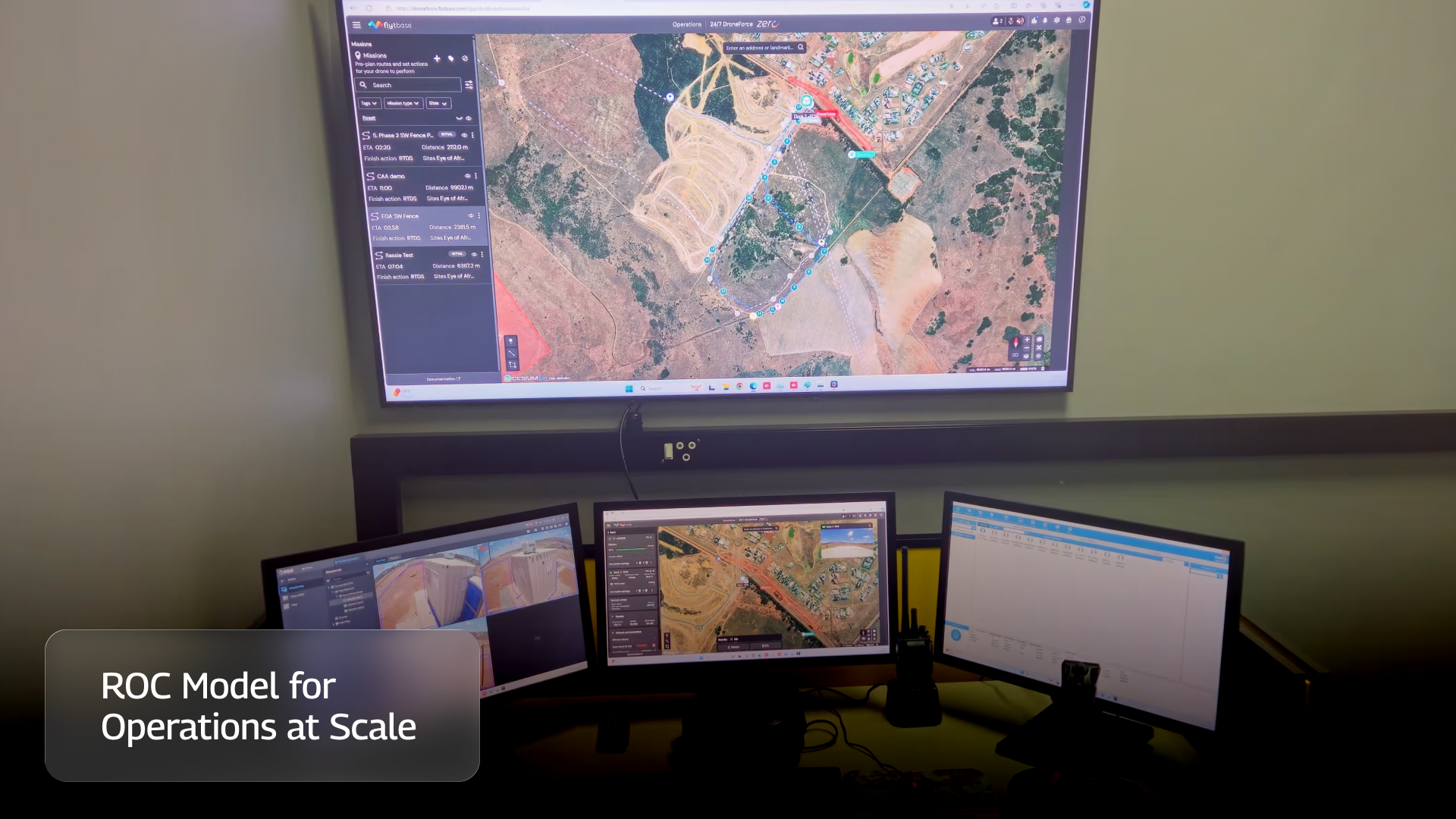
These systems can be remotely triggered by operators hundreds of kilometers away, as seen in LATAM and Australia, where remote control rooms manage mines across vast distances.
“The idea is simple — before the new crew arrives, the system has already done the work,” explains one site automation engineer. “Now, when the operations team walks in on Monday, they’re planning from current, verified data.”
From manual scheduling to automated continuity
With FlytBase’s autonomy platform, these workflows are programmable down to the minute:
- Schedule recurring pit surveys aligned to FIFO rotations.
- Automate takeoff, mission execution, data upload, and cloud processing in apps like.
- Share processed 3D models and panoramas directly with planning and safety teams.
FlytBase integrates directly with Pix4D, DroneDeploy, and Strayos, allowing every scheduled mission to feed seamlessly into existing mine-planning software. Once a drone lands, the imagery is automatically sent to the preferred processing pipeline, generating 3D pit models, contours, and orthomosaics without any manual transfer or waiting.
Teams receive ready-to-use maps and point clouds within hours, all tagged and timestamped in FlytBase’s cloud dashboard.
For remote operators, FlytBase provides centralized oversight of multiple mines, ensuring every survey runs as scheduled, even when on-site teams rotate.
Key benefits across the operation
- Data always ready for pre-planning: up-to-date pit conditions available before every planning meeting.
- Zero missed flights: autonomous scheduling ensures no dependency on human availability.
- Remote control scalability: one operator can manage multiple sites.
- Improved safety: fewer last-minute manual flights before crew change
- Operational consistency: continuity built into the system, not the shift.
The bigger picture: autonomy as infrastructure
In mining, autonomy is no longer a pilot project — it’s infrastructure. The ability to generate and distribute fresh, reliable data automatically across shifts means mines can maintain momentum without burnout or bottlenecks.
The value isn’t just in the data collected; it’s in the continuity created. From mining to utilities, enterprises are adopting dock-based drone systems powered by FlytBase to achieve consistent, autonomous visibility across distributed operations.
Explore how autonomy is helping industrial teams move from scheduled effort to continuous intelligence in the FlytBase Case Study Library.
FAQs
Find quick answers to common questions about compatibility, setup, features, and pricing
A FIFO (Fly-In, Fly-Out) handover refers to the process of transferring operational data and updates between outgoing and incoming mining teams that rotate on scheduled shifts. Accurate pit data during this transition is critical for safe and efficient weekly planning.
Because manual pit surveys depend on crew timing, weather, and resource availability. When survey flights are missed or delayed before crew changeovers, incoming teams often start with outdated pit data — leading to slower planning and reduced accuracy.
Docked drones powered by FlytBase perform scheduled pit surveys automatically, even when no staff are on-site. Data is captured, uploaded, and processed before the next shift arrives — providing fresh, verified visuals and 3D models for immediate planning.
FlytBase integrates with leading mining and mapping platforms like Pix4D, DroneDeploy, and Strayos. Captured imagery is automatically transferred for photogrammetry processing, generating orthomosaics, contours, and 3D pit models without manual uploads.
.webp)
.svg)
.webp)
.png)
